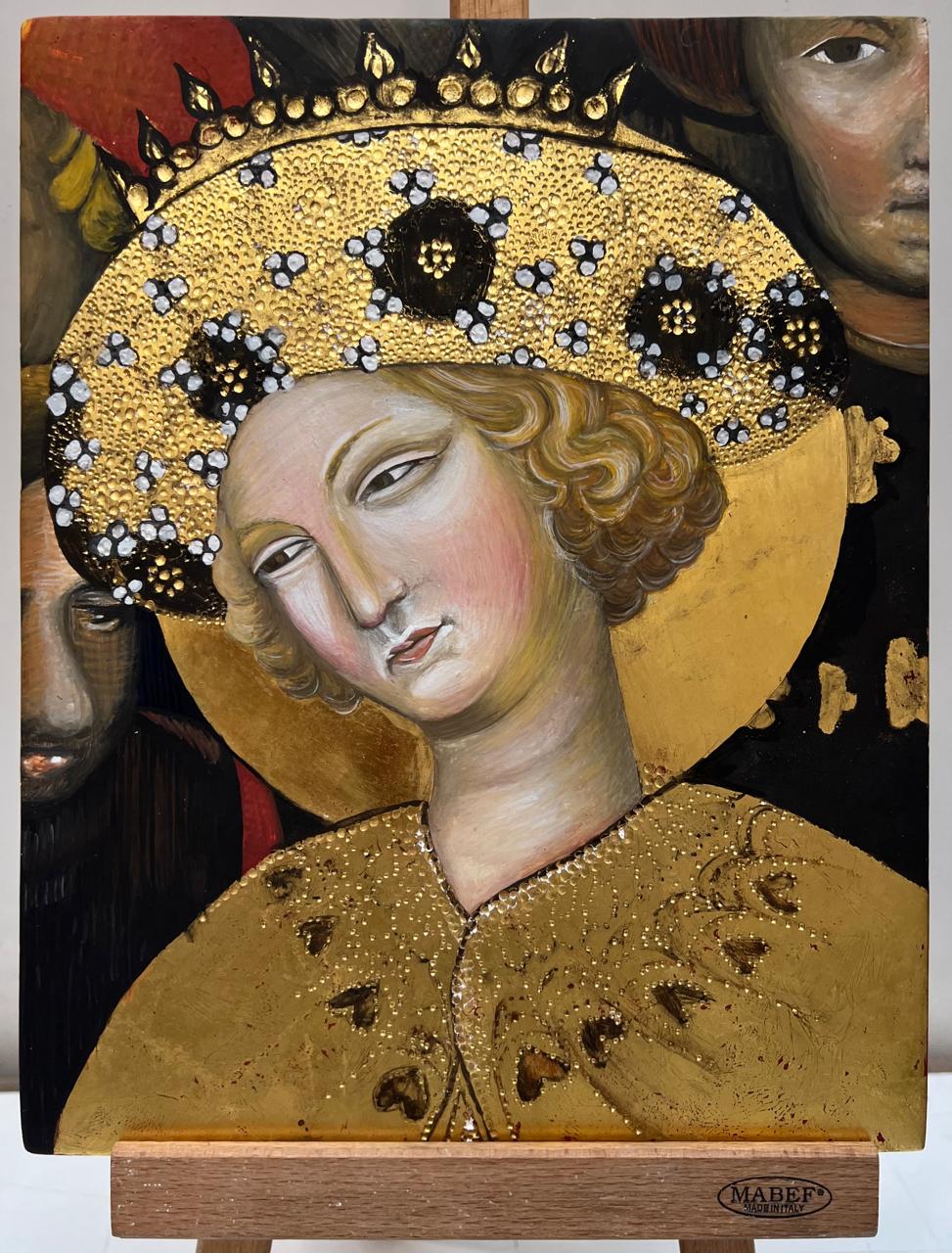
Wood Panel Painting with Gold Gilding
Wood panel painting was the dominant support for easel painting in Italy from the 13th to the 16th century. Panels were prepared with multiple layers of gesso (rabbit-skin glue and chalk) to create a smooth, uniform ground for painting. Gold gilding, applied using bole and gold leaf, was an integral part of this tradition — used for backgrounds, haloes, decorative patterning, and highlights.
The following sequence documents the process of preparing and painting a wood panel using the Renaissance method, working from preliminary sketch through to the application of gold leaf, stamped gilding, and the final painted surface. The work reproduces a detail from Gentile da Fabriano’s Strozzi Altarpiece (1423).
Step by Step
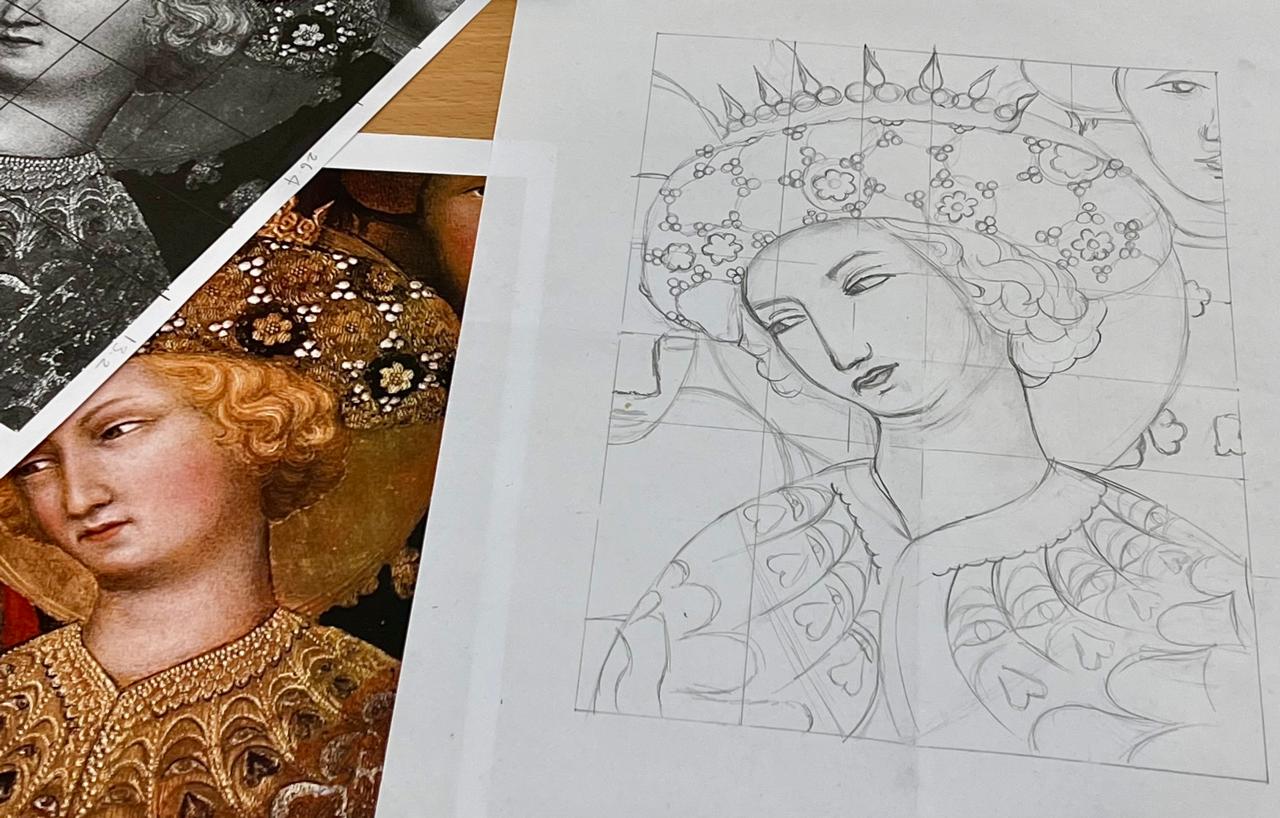
The composition is lightly sketched onto the gessoed panel to establish the layout before the underdrawing is developed.
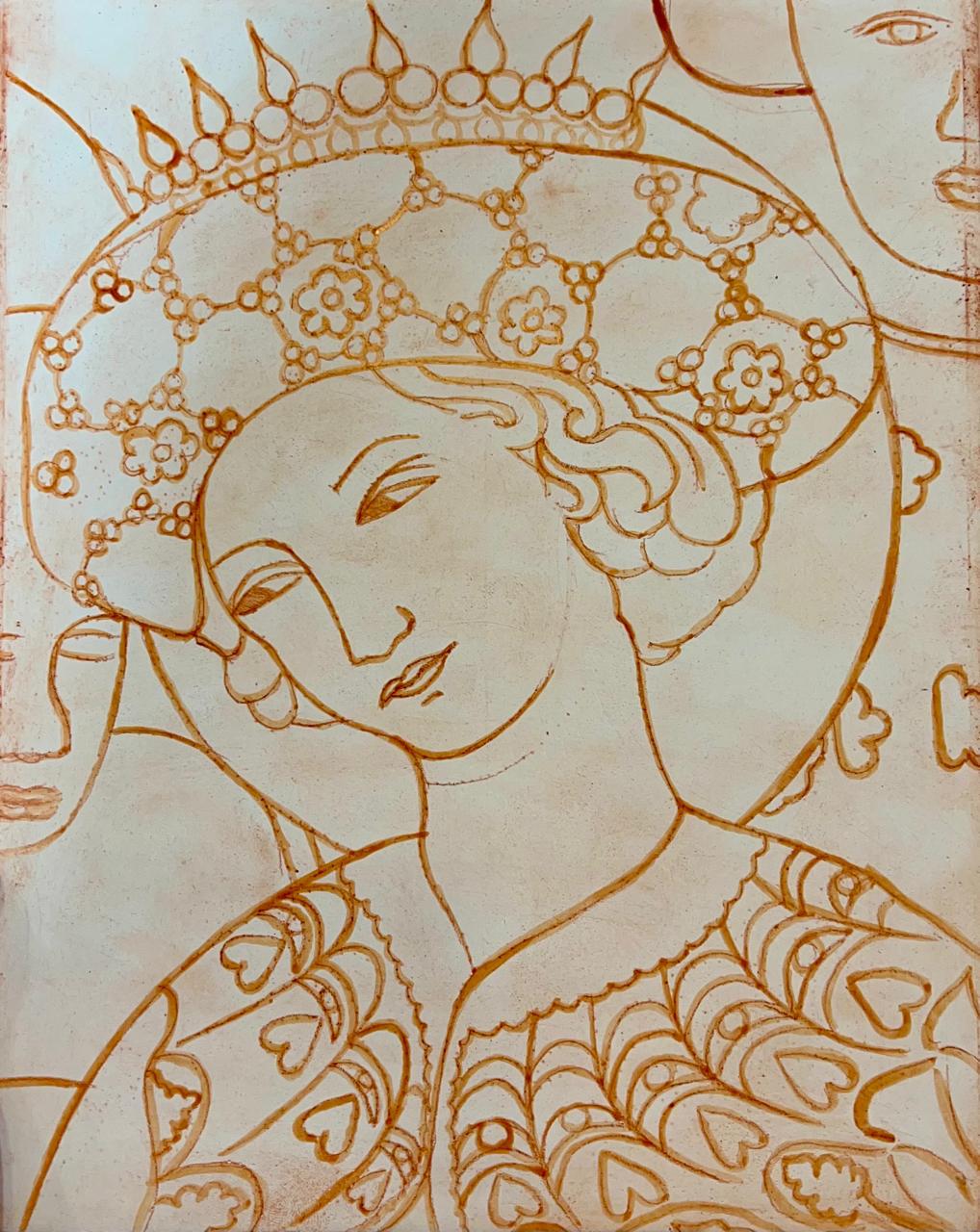
The design is drawn in ink over the pencil sketch, defining contours and compositional lines that will guide the painting and gilding.
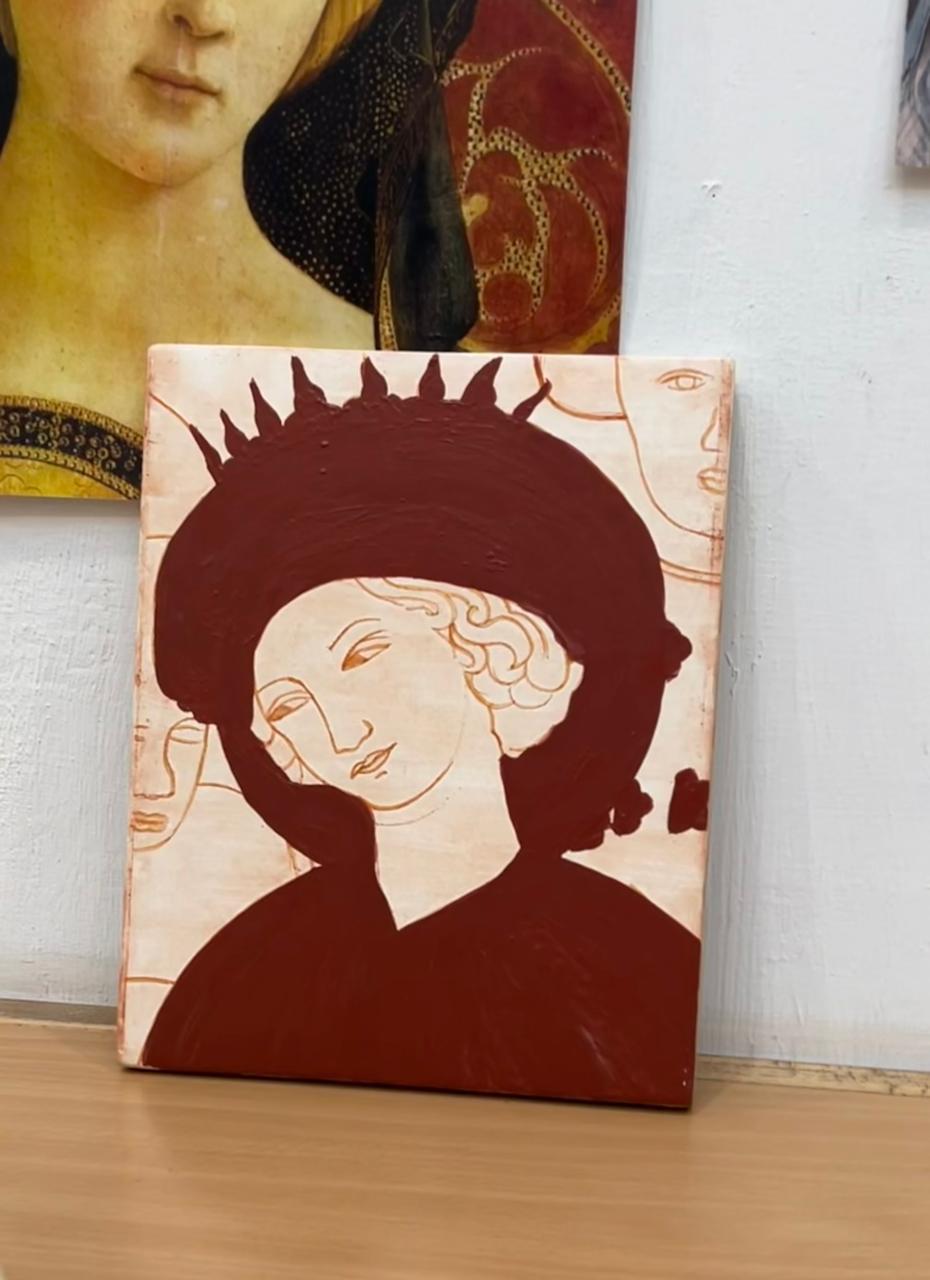
Red or yellow bole (a clay-based ground) is applied to the areas to be gilded. The bole provides adhesion for the gold leaf and its colour influences the warmth of the finished gilding.
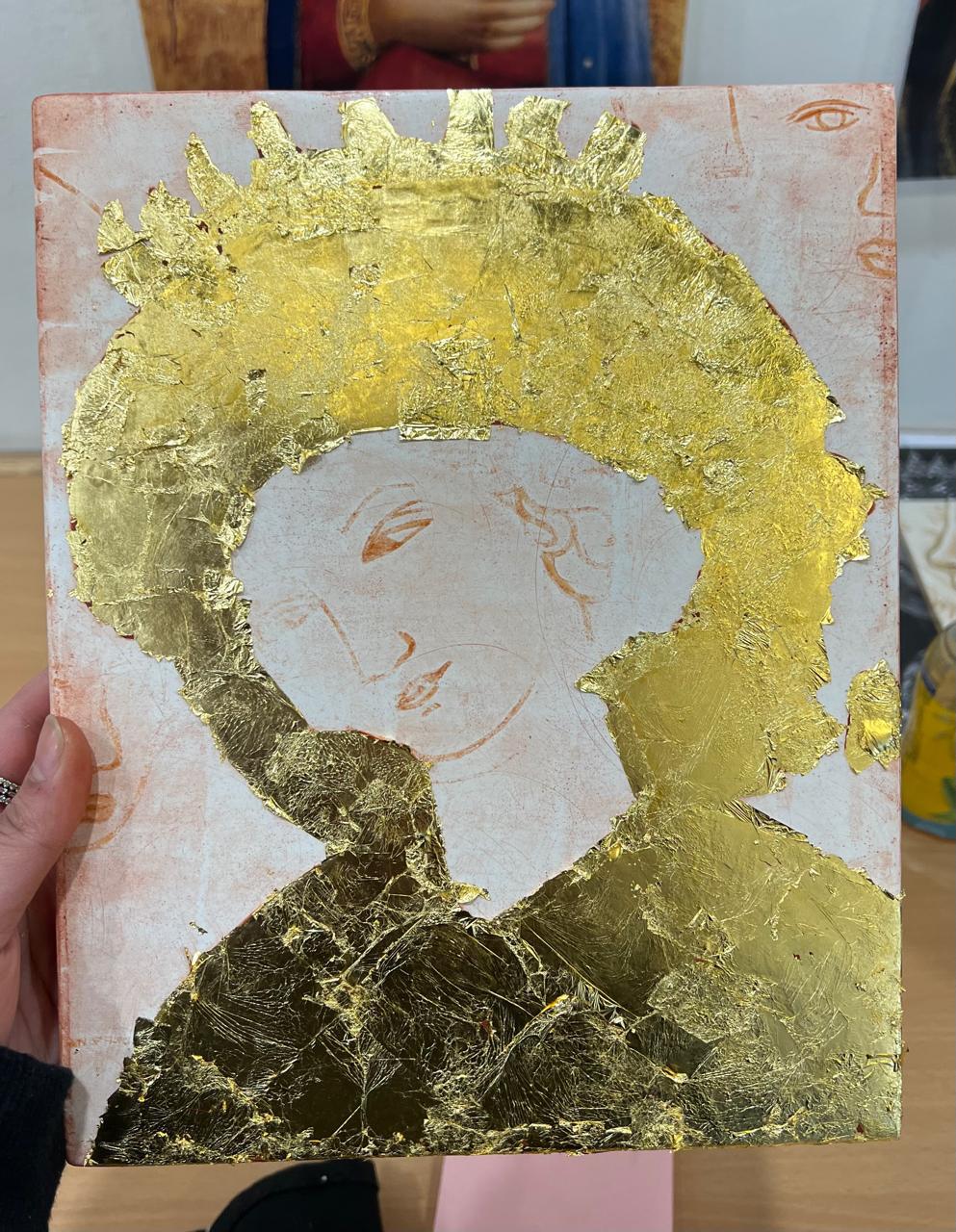
Gold leaf is laid onto the moistened bole using a gilder’s tip. Overlapping sheets are applied to cover the entire gilded area before the bole fully dries.
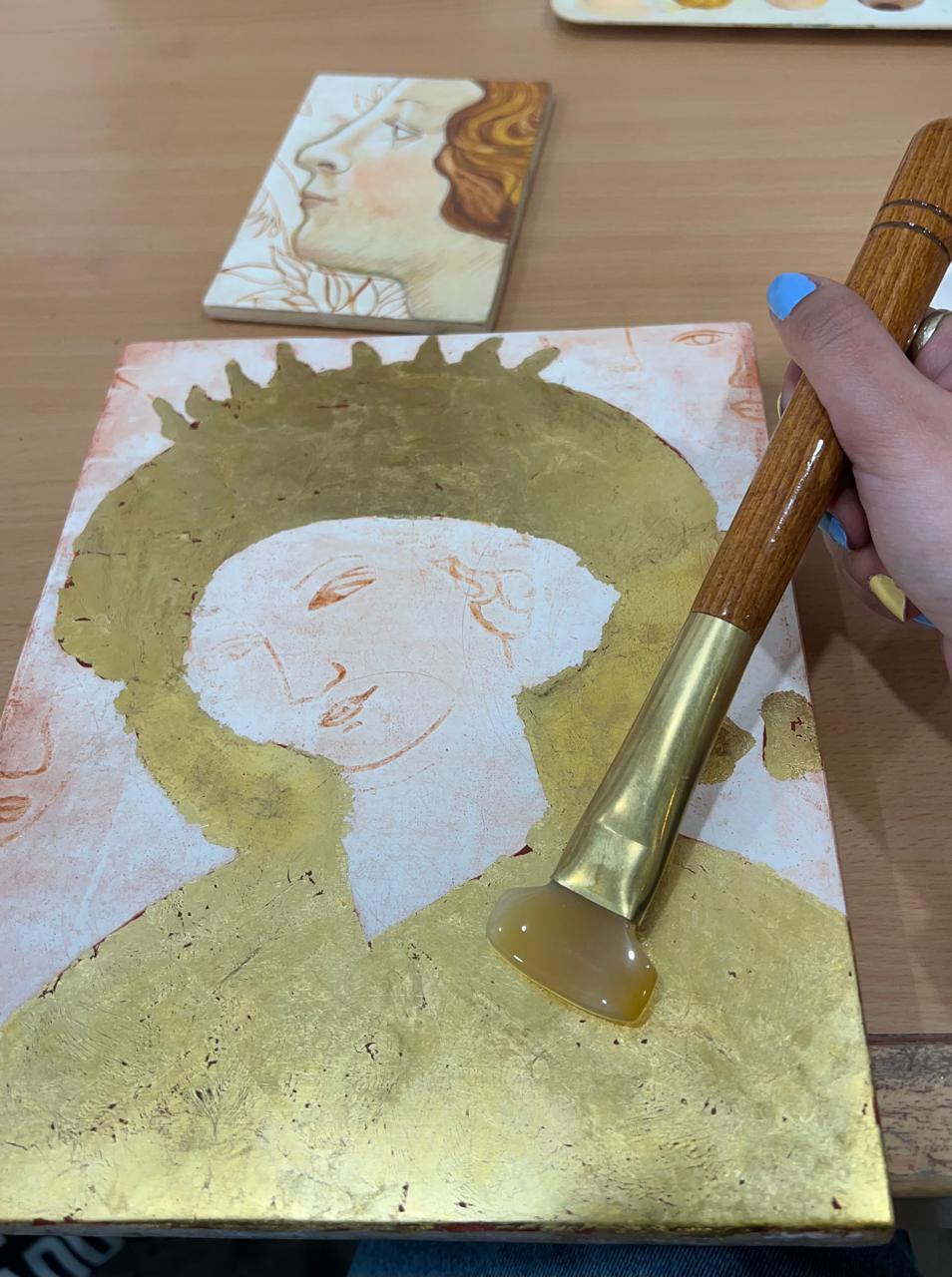
Once the gold has set, it is burnished with an agate stone to compress the leaf and produce a highly reflective, mirror-like surface.
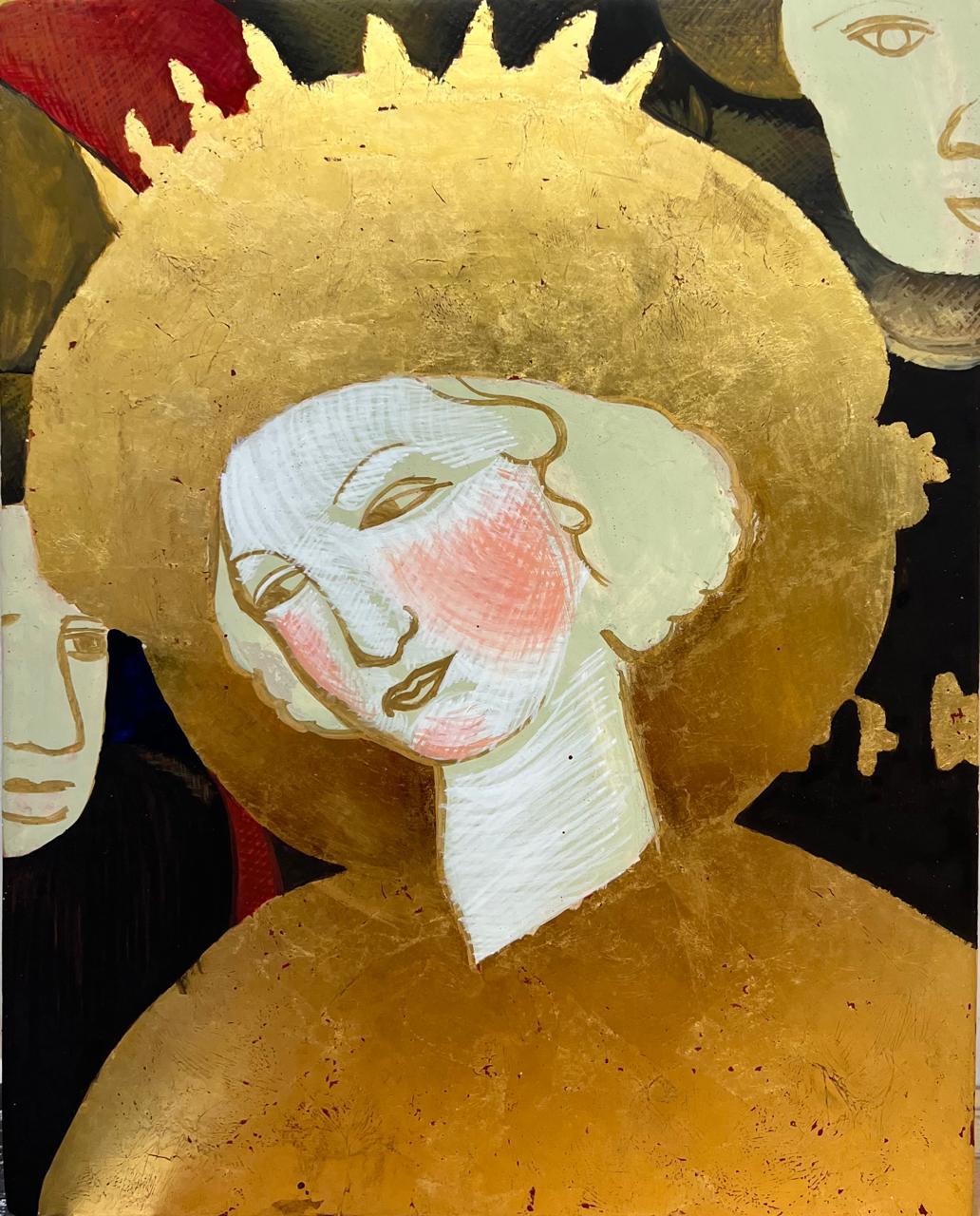
Flesh painting is built up in layered tempera glazes, beginning with the underlying tones that establish the form before further modelling is applied.
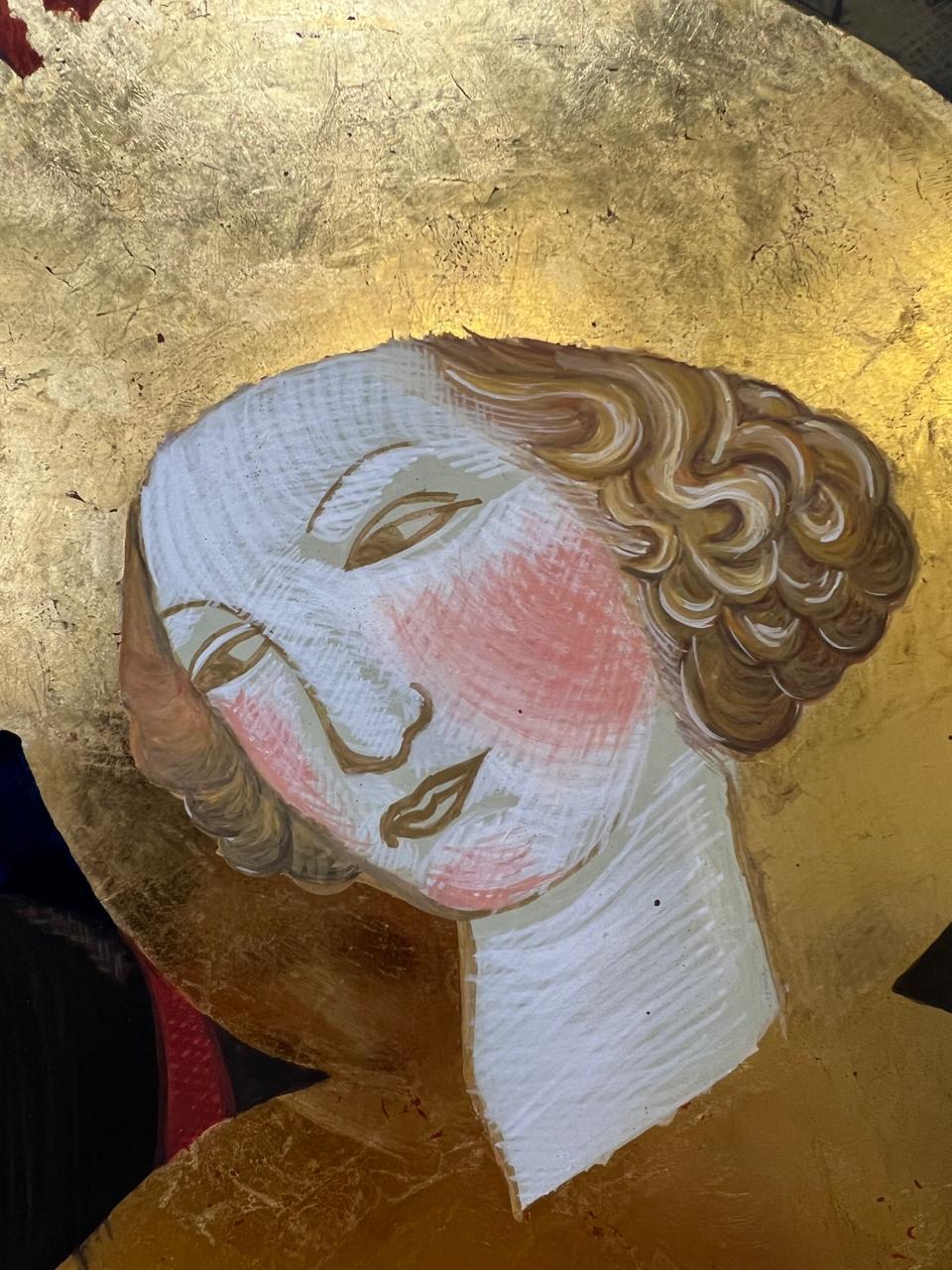
Further tempera layers refine the modelling of face and hair, building up the surface gradually to achieve the characteristic luminosity of egg tempera.
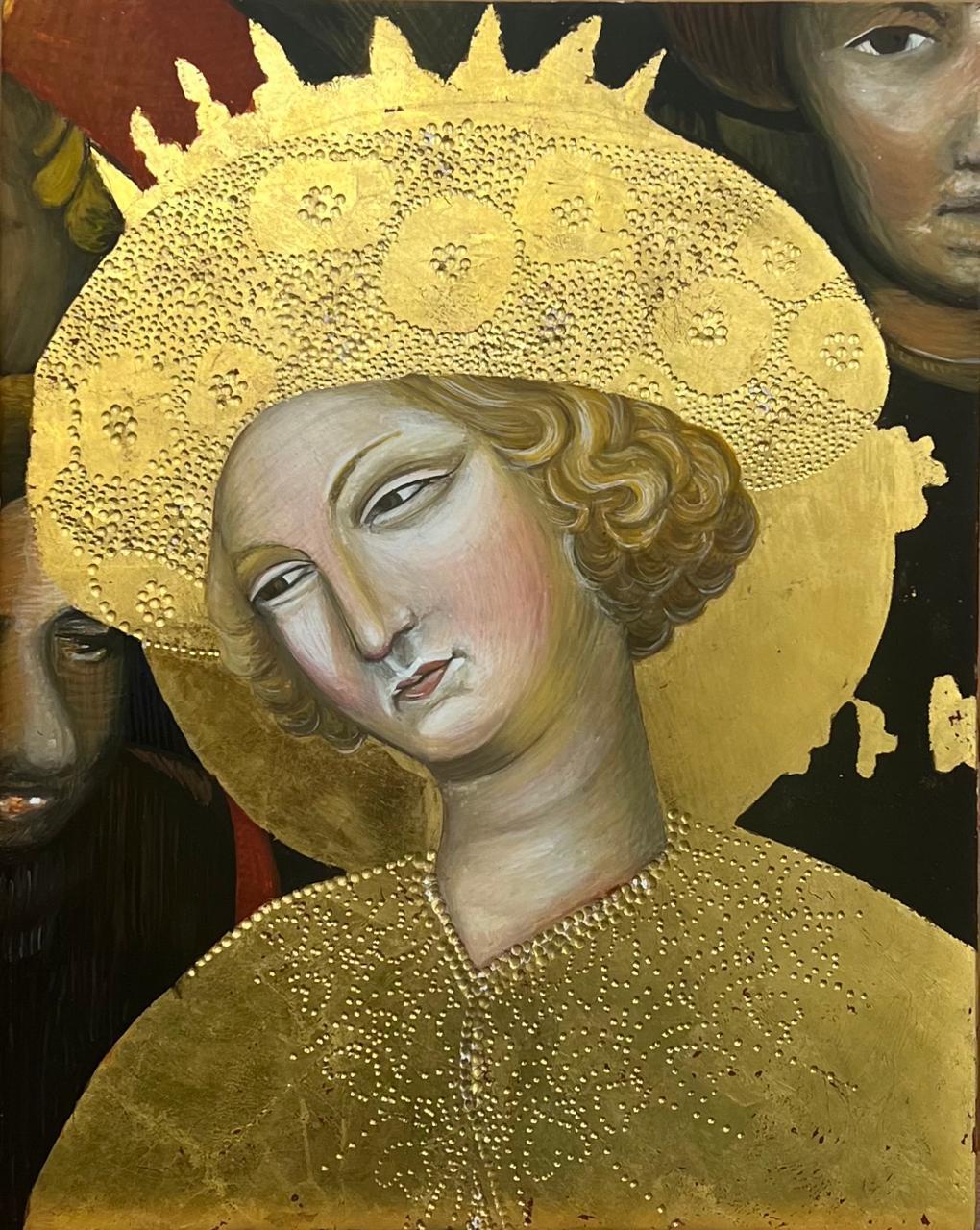
Decorative punched patterns are pressed into the gilded areas using metal stamps, adding texture and ornamental detail to the halo and gold background.
The completed panel reproducing a detail from the Strozzi Altarpiece by Gentile da Fabriano (1423): tempera on gessoed panel with burnished gold leaf and punched gilding.