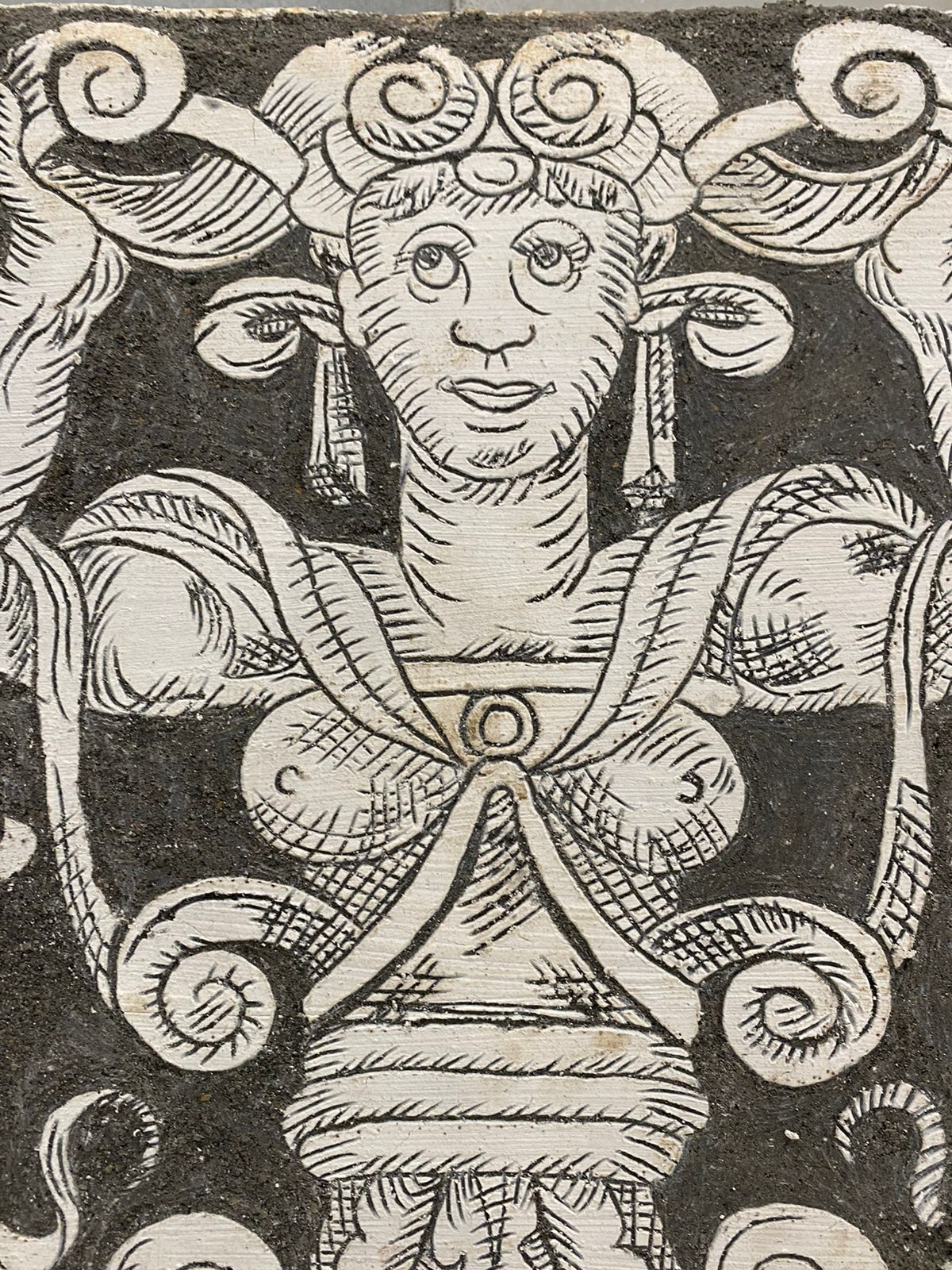
Sgraffito
Sgraffito (from the Italian sgraffiare, to scratch) is a decorative technique in which two or more layers of differently coloured plaster are applied to a wall, and the upper layer is scratched away while still wet to reveal the colour beneath. The result is a design formed by the contrast between the exposed lower layer and the remaining surface plaster.
The technique was widely used in Italian Renaissance architecture for exterior façade decoration, particularly in Florence and Genoa. It allows for complex figurative and ornamental patterns with a durability suited to exterior surfaces.
The following sequence documents the preparation of the plaster layers and the incision process used to create the finished design.
Step by Step
The base (lower) layer of coloured lime plaster is applied and left to set. This colour will be revealed by the subsequent scratching and forms the design against the upper layer.
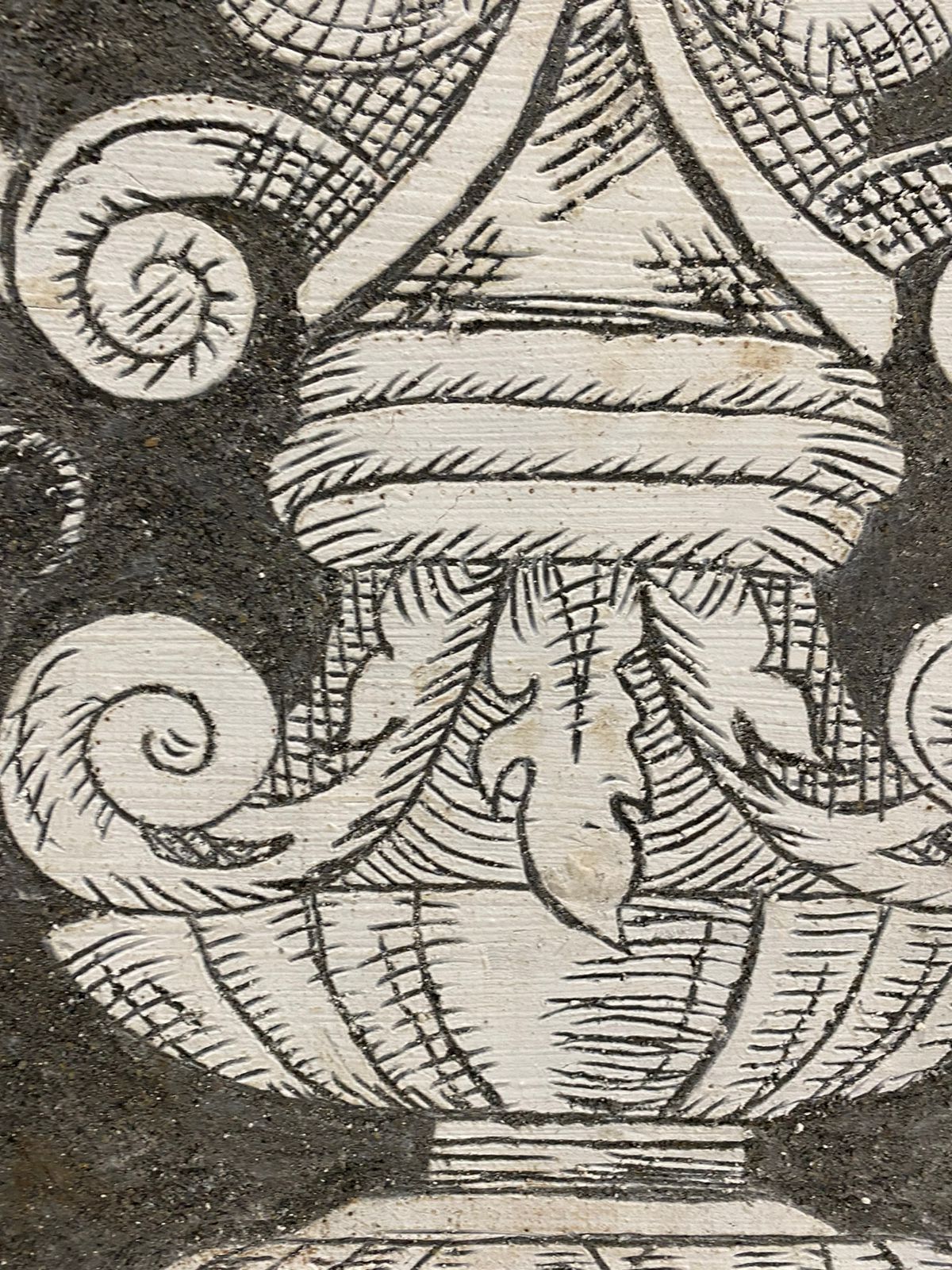
A second layer of differently coloured plaster is applied over the first while still fresh. The design is transferred and the incision must begin before this layer hardens.
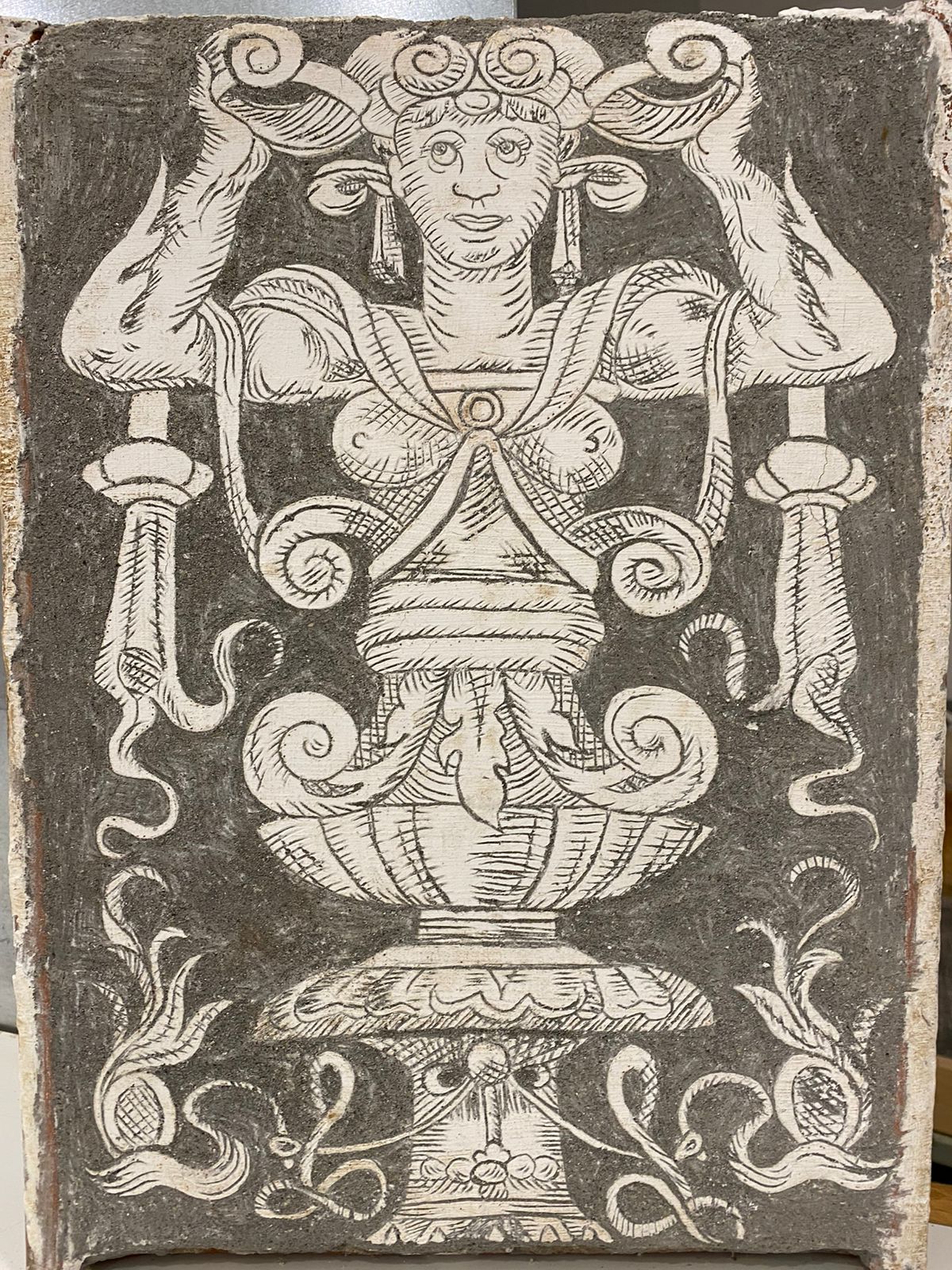
Using metal tools, the upper plaster layer is scratched away along the design lines while still workable, revealing the contrasting colour of the lower layer beneath.
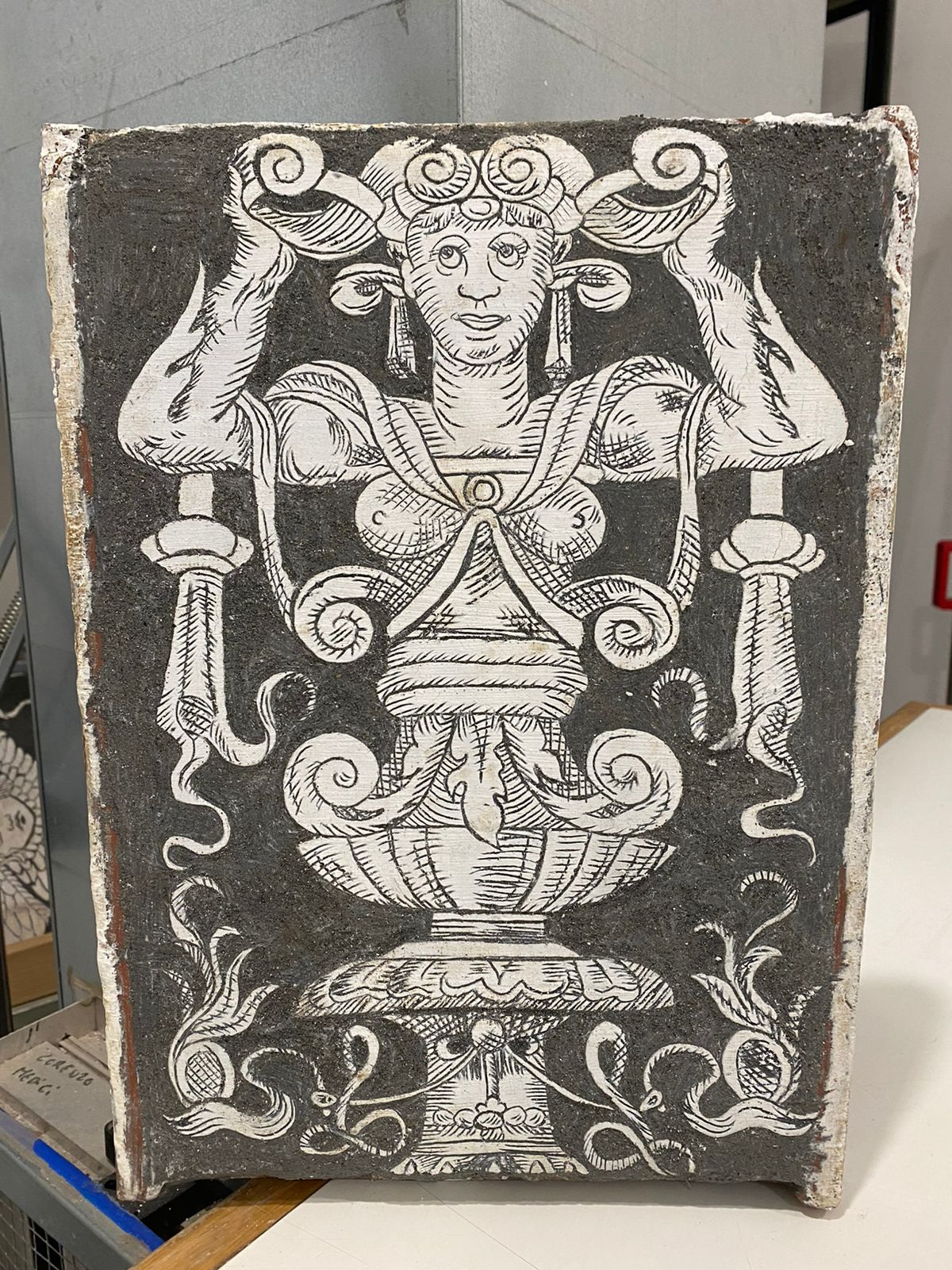
Detail work is carried out to refine the design, adjusting line weight and removing areas of upper plaster with greater precision to achieve the intended composition.
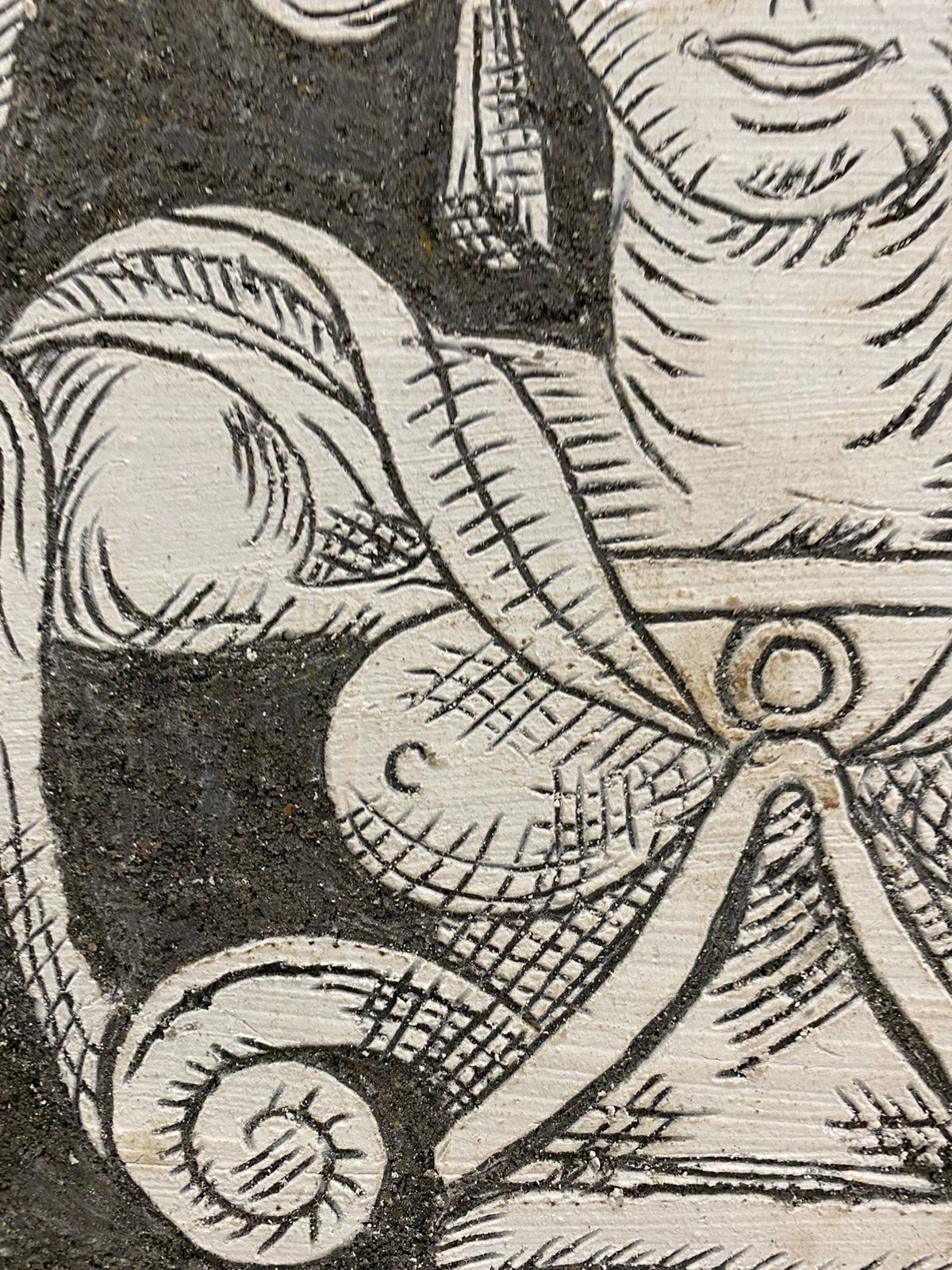
The finished sgraffito surface, with the two-colour design formed by the contrast between the incised lower layer and the surrounding upper plaster.
Written documentation of the sgraffito process including material preparation, tool use, and step-by-step notes on execution.