Fresco Painting and Strappo
Fresco painting involves applying pigments mixed in water directly onto freshly laid lime plaster (intonaco). As the plaster carbonates and hardens, the pigment becomes chemically bound to the wall surface, making it highly durable. The technique requires working swiftly and accurately, as only the area that can be painted before the plaster sets is laid at one time.
The strappo technique is a method of detaching a fresco from its wall support by adhering a canvas or gauze to the paint surface and physically pulling it free. This removes only the topmost paint layer, leaving the sinopia and intonaco behind. The detached fragment is then mounted on a new support for preservation.
The following sequence documents both processes: the preparation and execution of a fresco painting, and the strappo procedure used to detach the finished work from the wall.
Step by Step
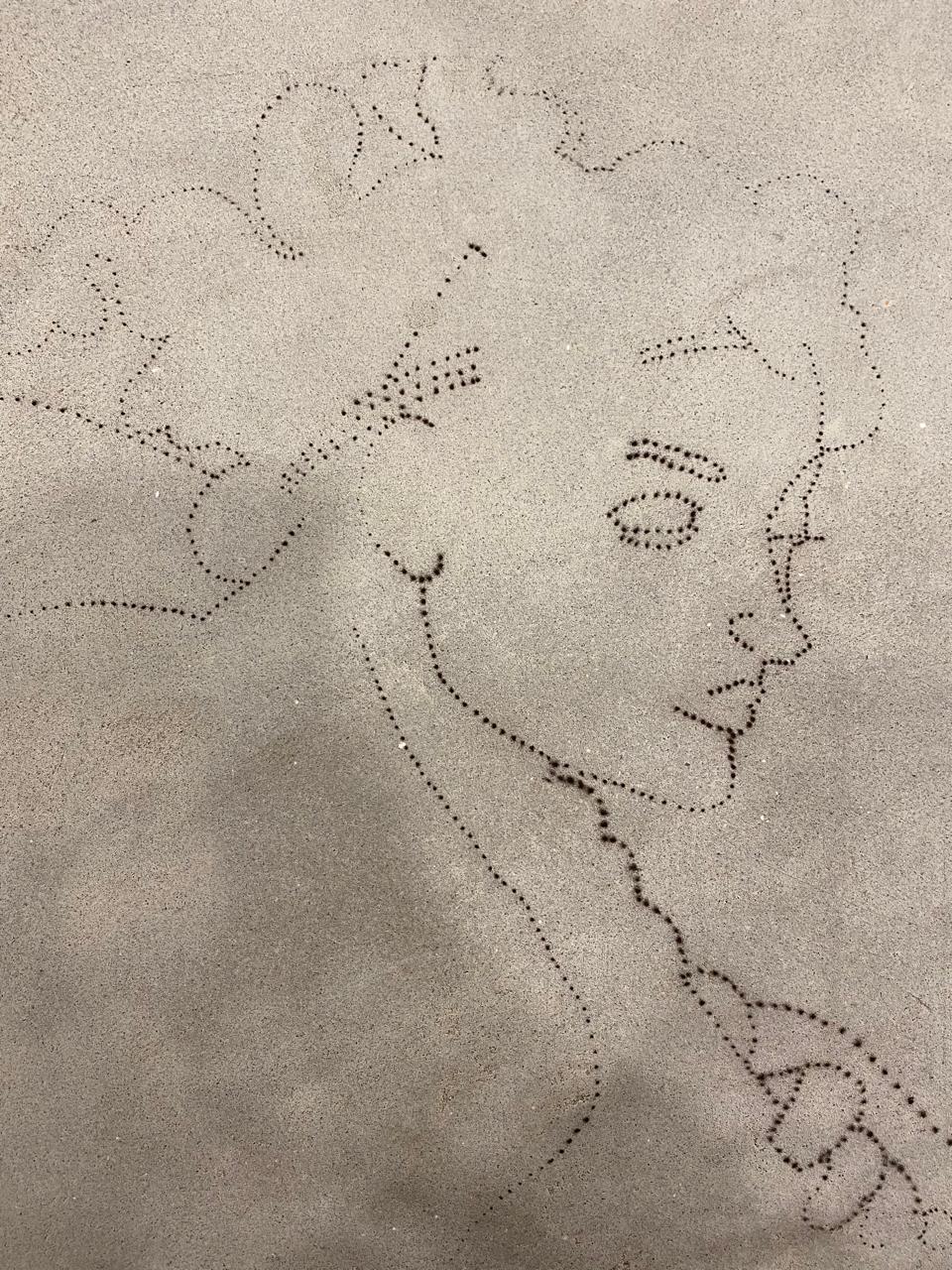
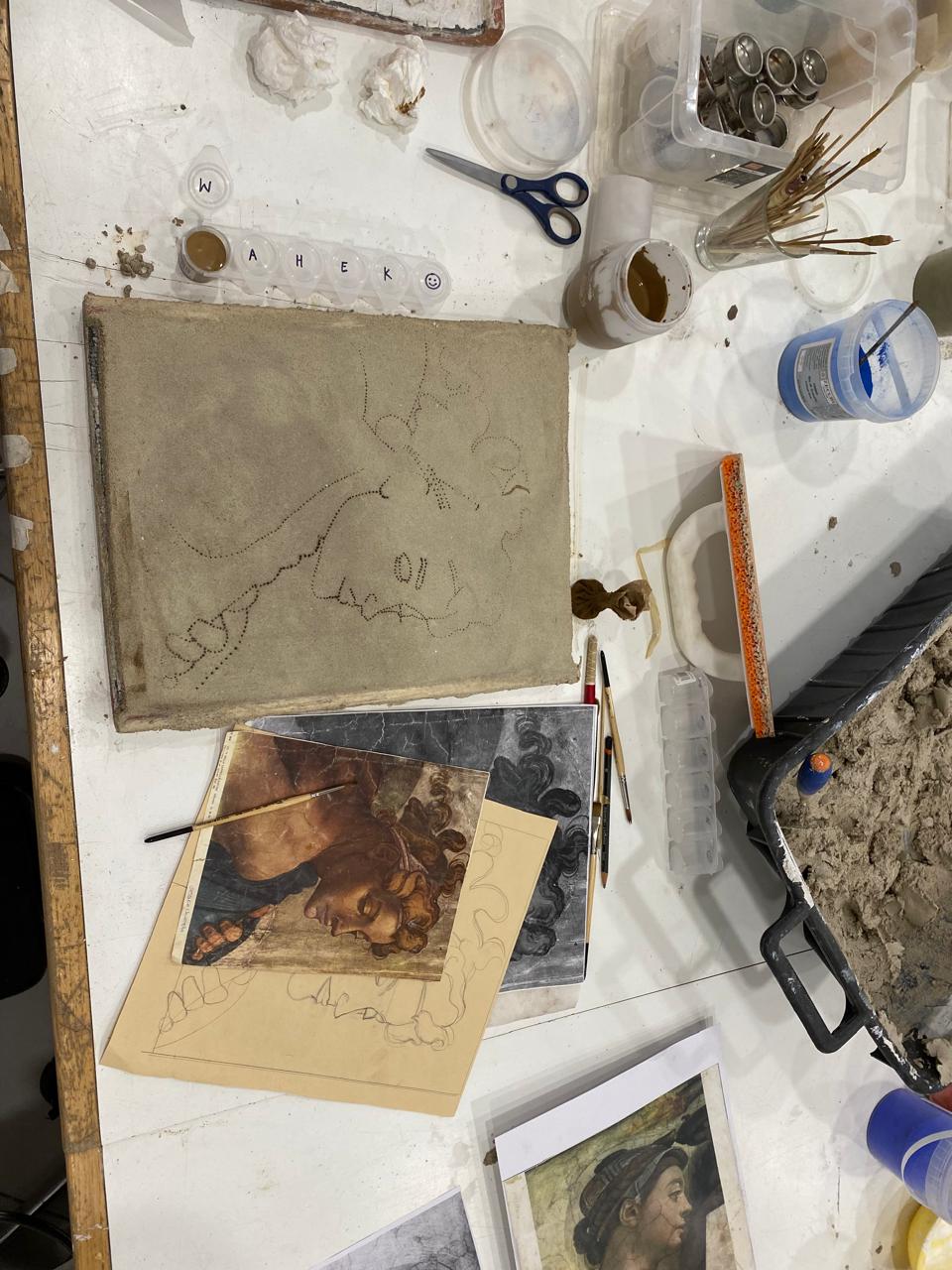
The preparatory cartoon is transferred to the arriccio plaster using the spolvero method: a pricked tracing is dusted with charcoal powder, leaving dotted guidelines on the surface.
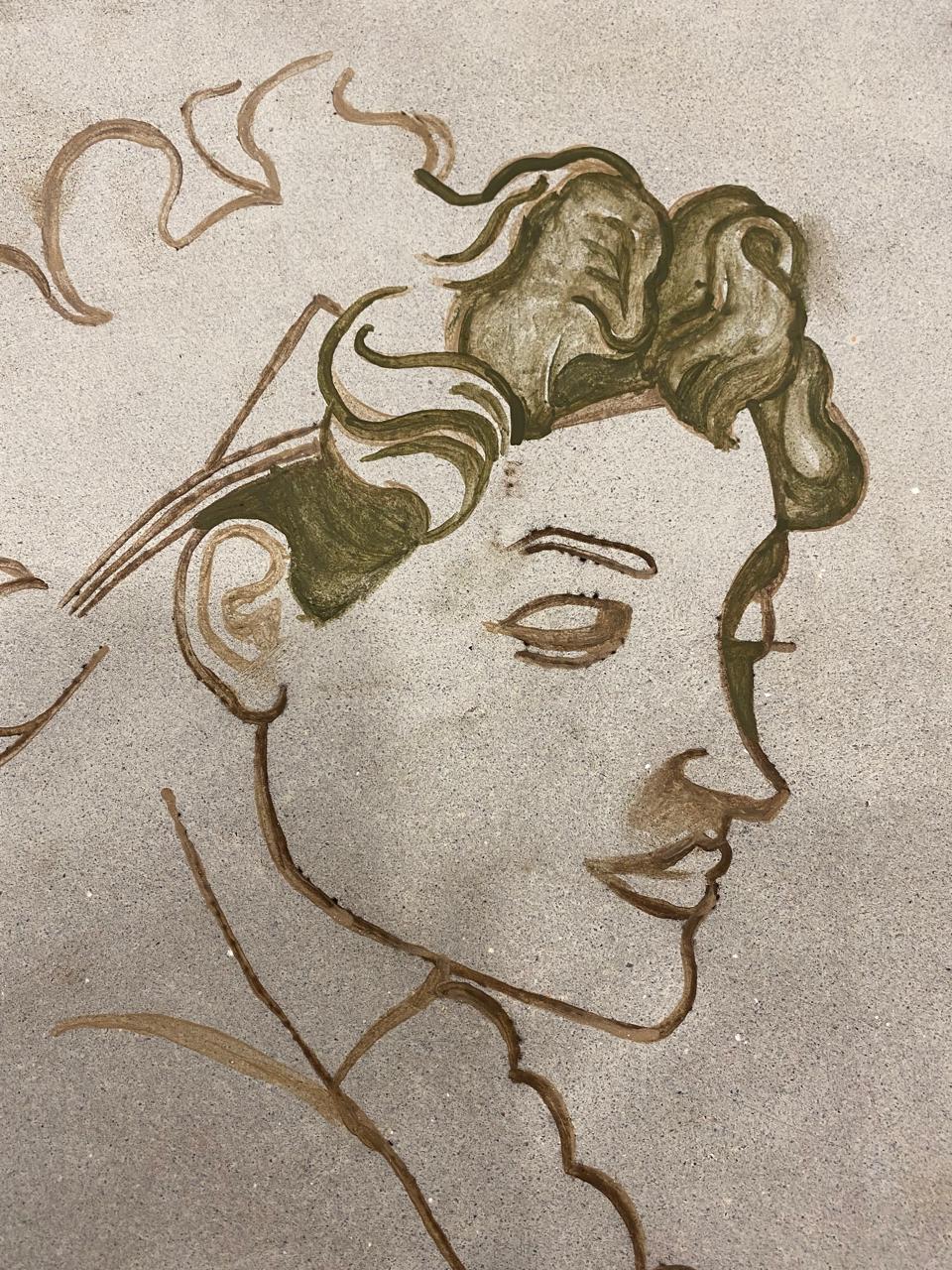
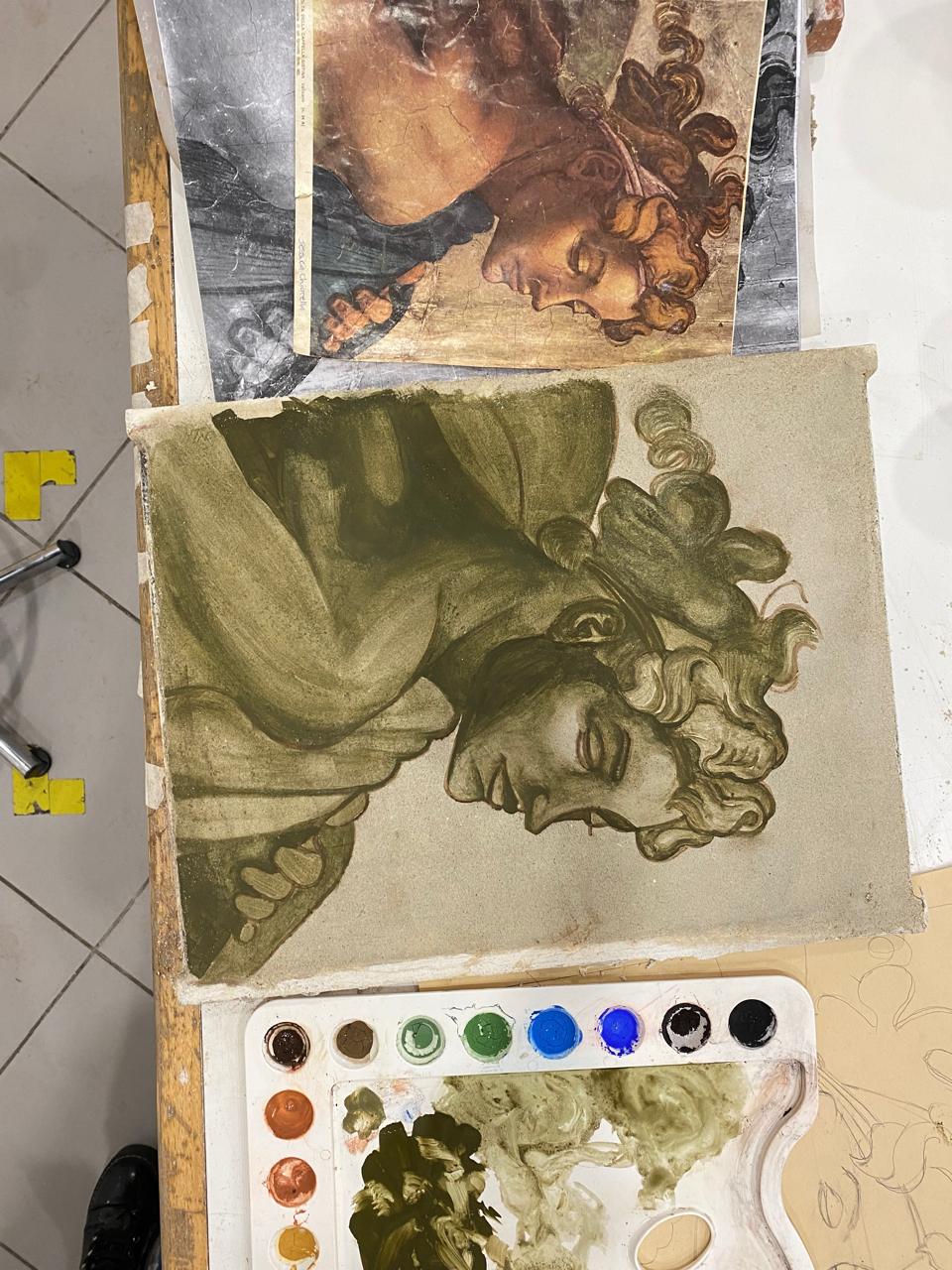
The composition is drawn onto the arriccio in sinopia (a red earth pigment), establishing the underdrawing before the final layer of intonaco plaster is applied.
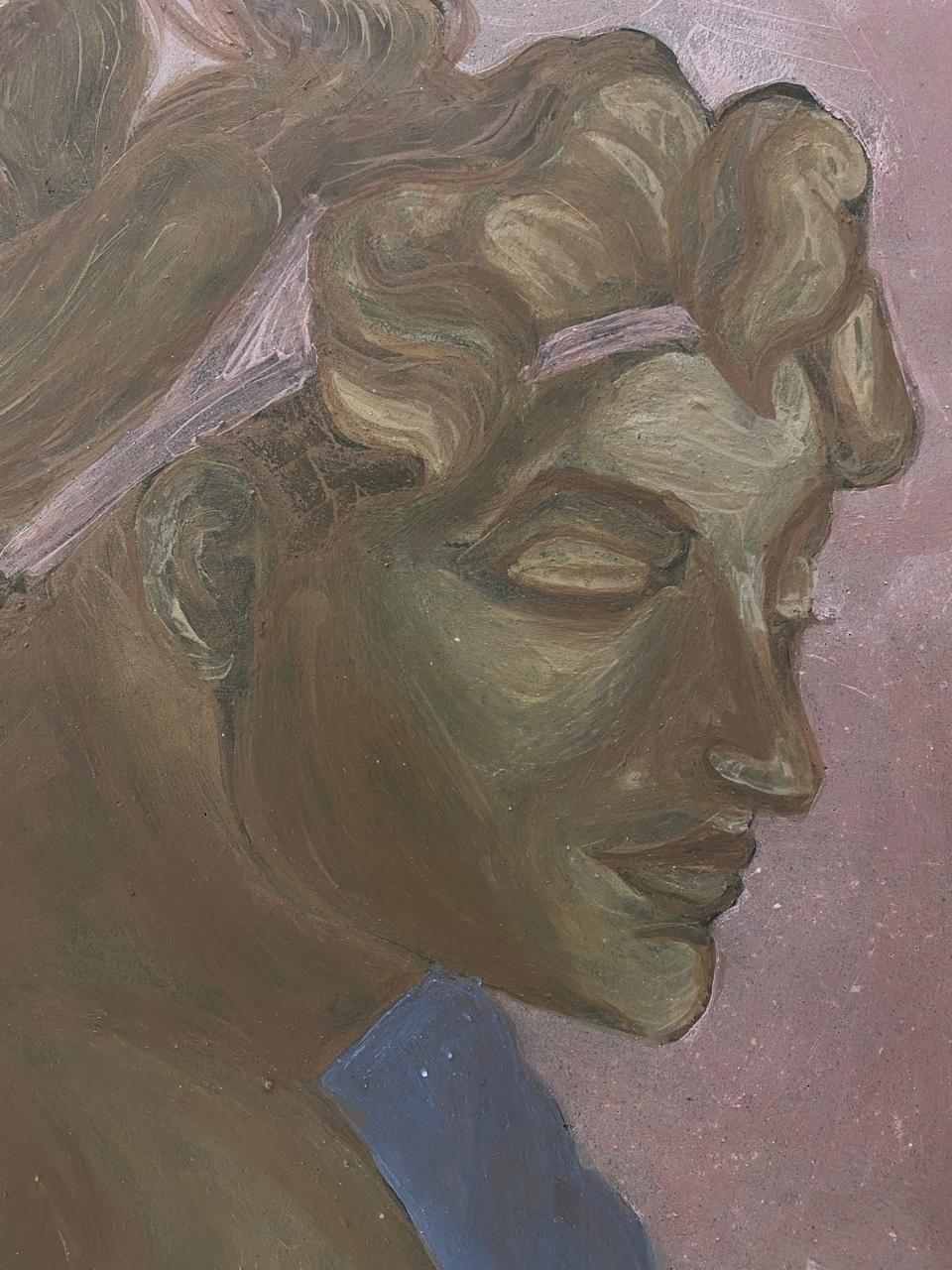
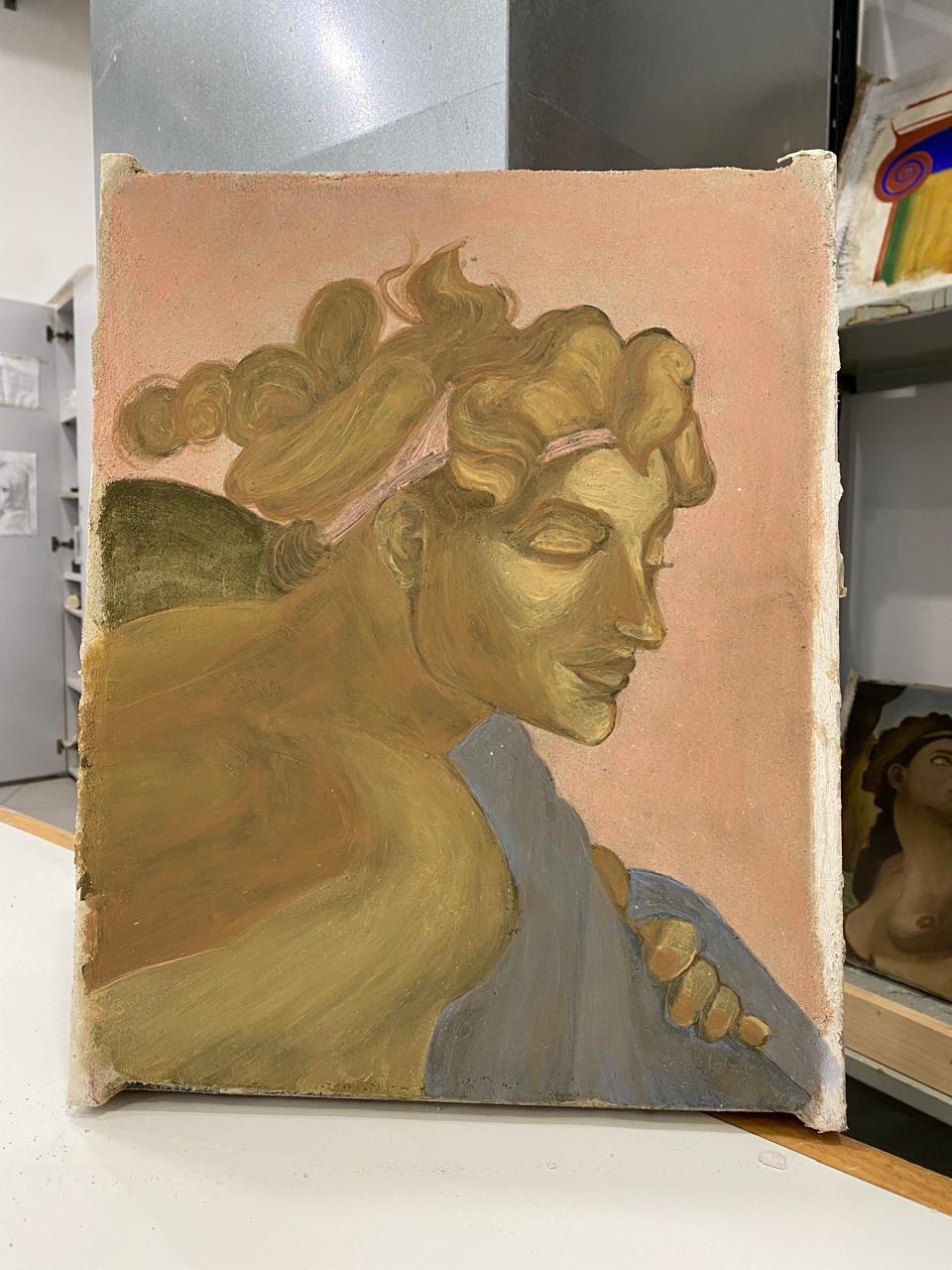
Pigments mixed in water are applied to the freshly laid intonaco. Each day’s work (giornata) is planned to match the area that can be painted before the plaster sets.
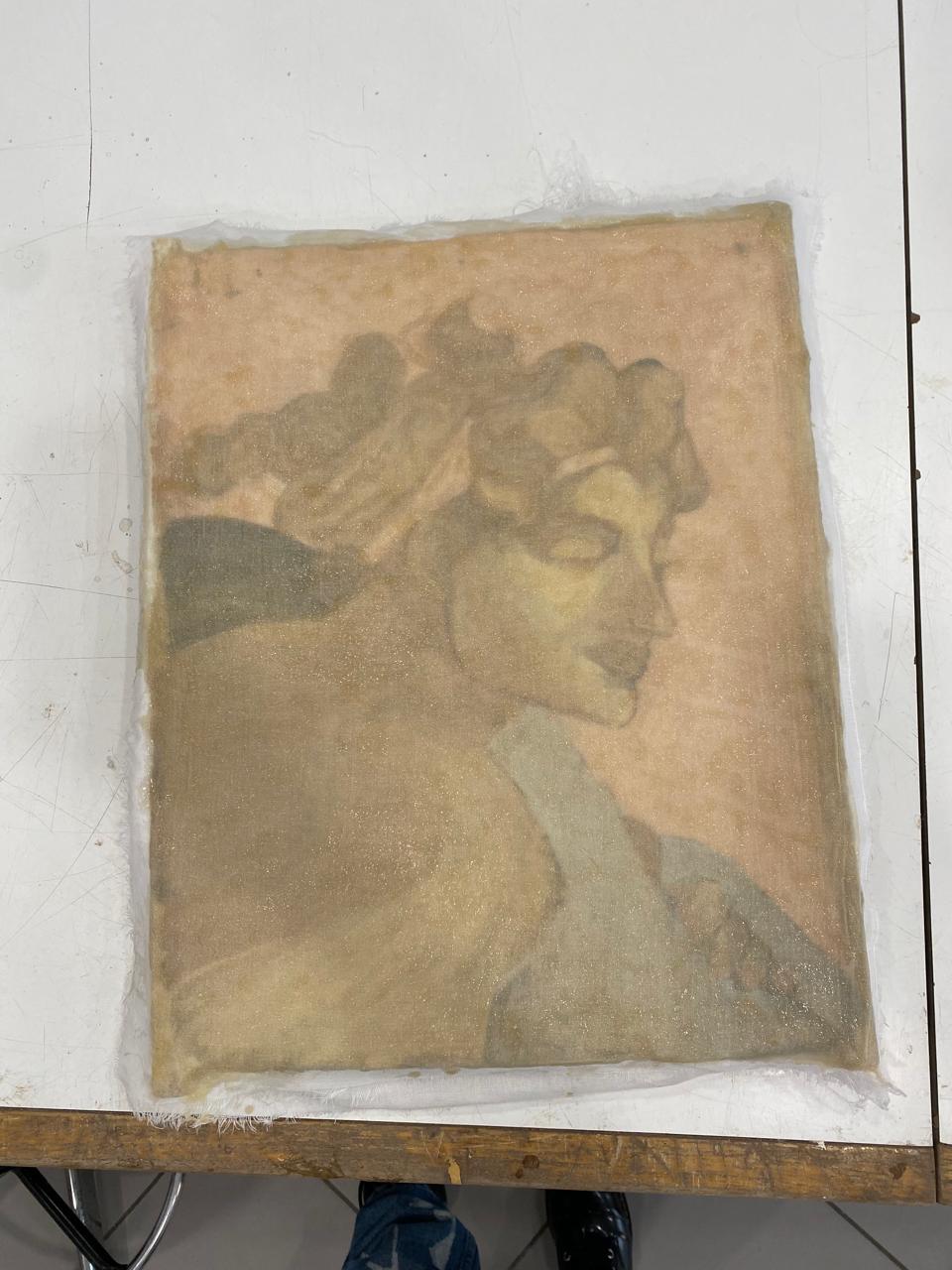
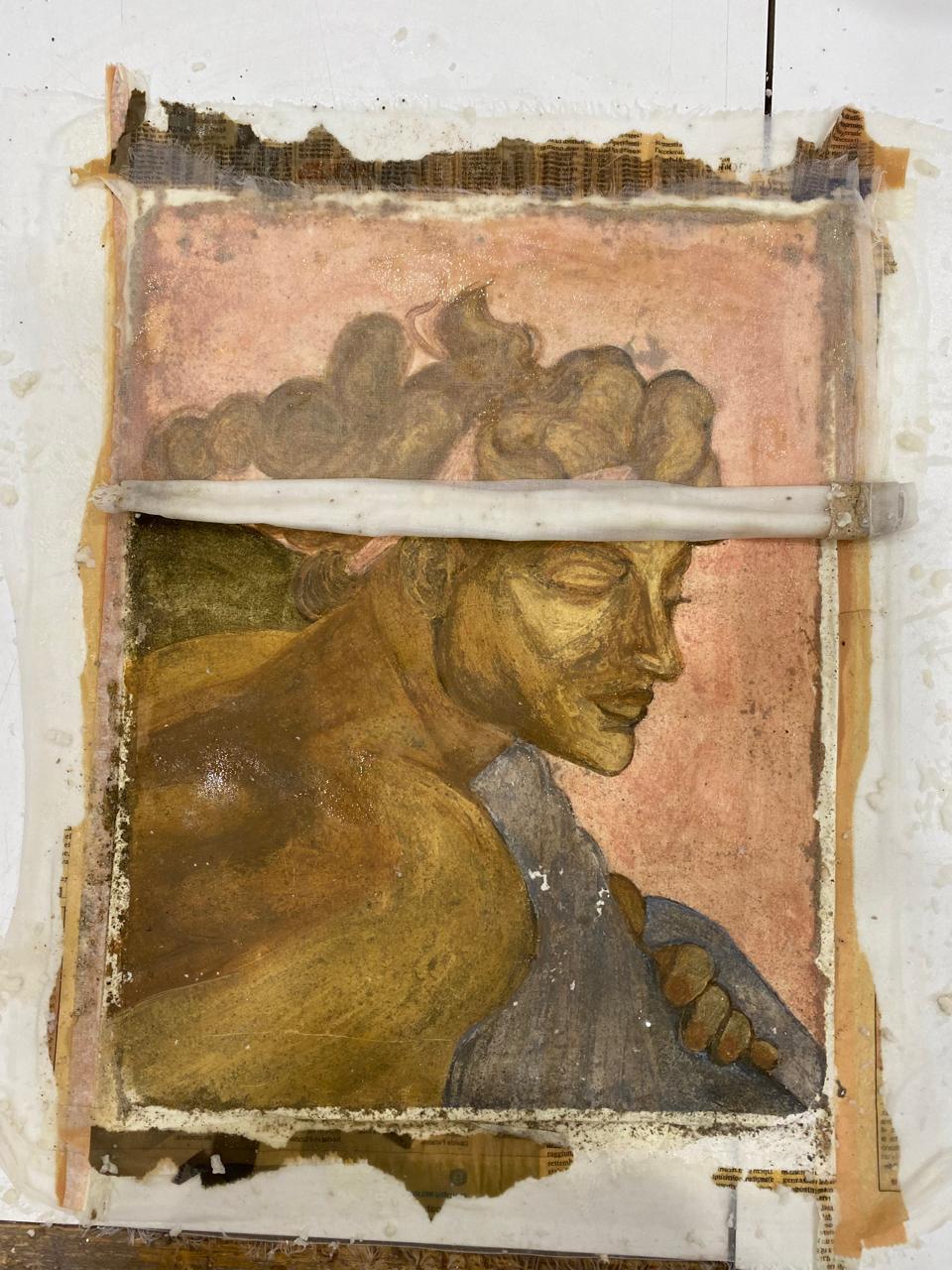
To begin the strappo detachment, a fabric facing is adhered to the painted surface to protect the paint layer and provide structural support during the peeling process.
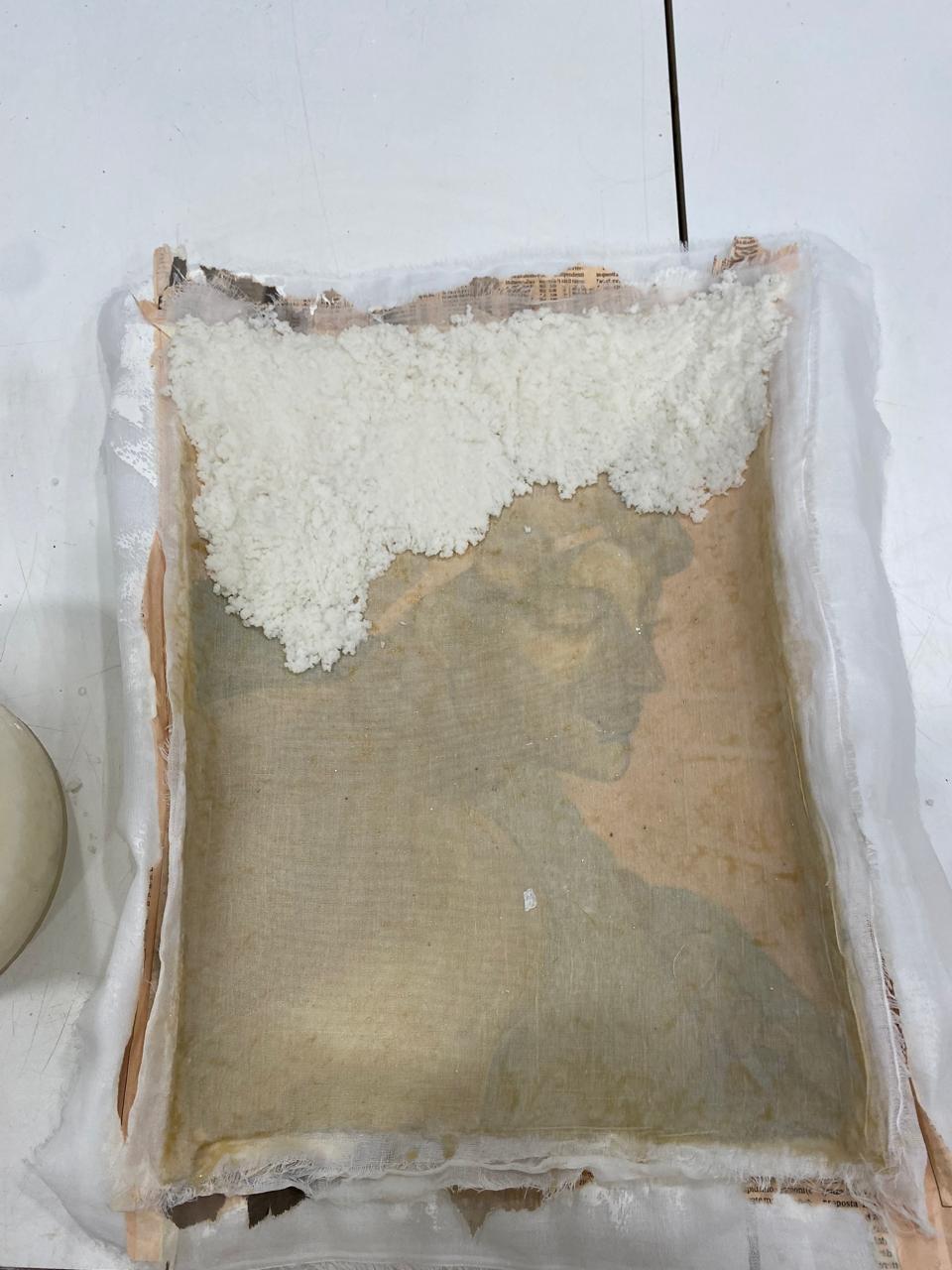
A cellulose layer is applied over the fabric facing to reinforce the backing before detachment, providing additional support for the thin paint film once separated from the wall.
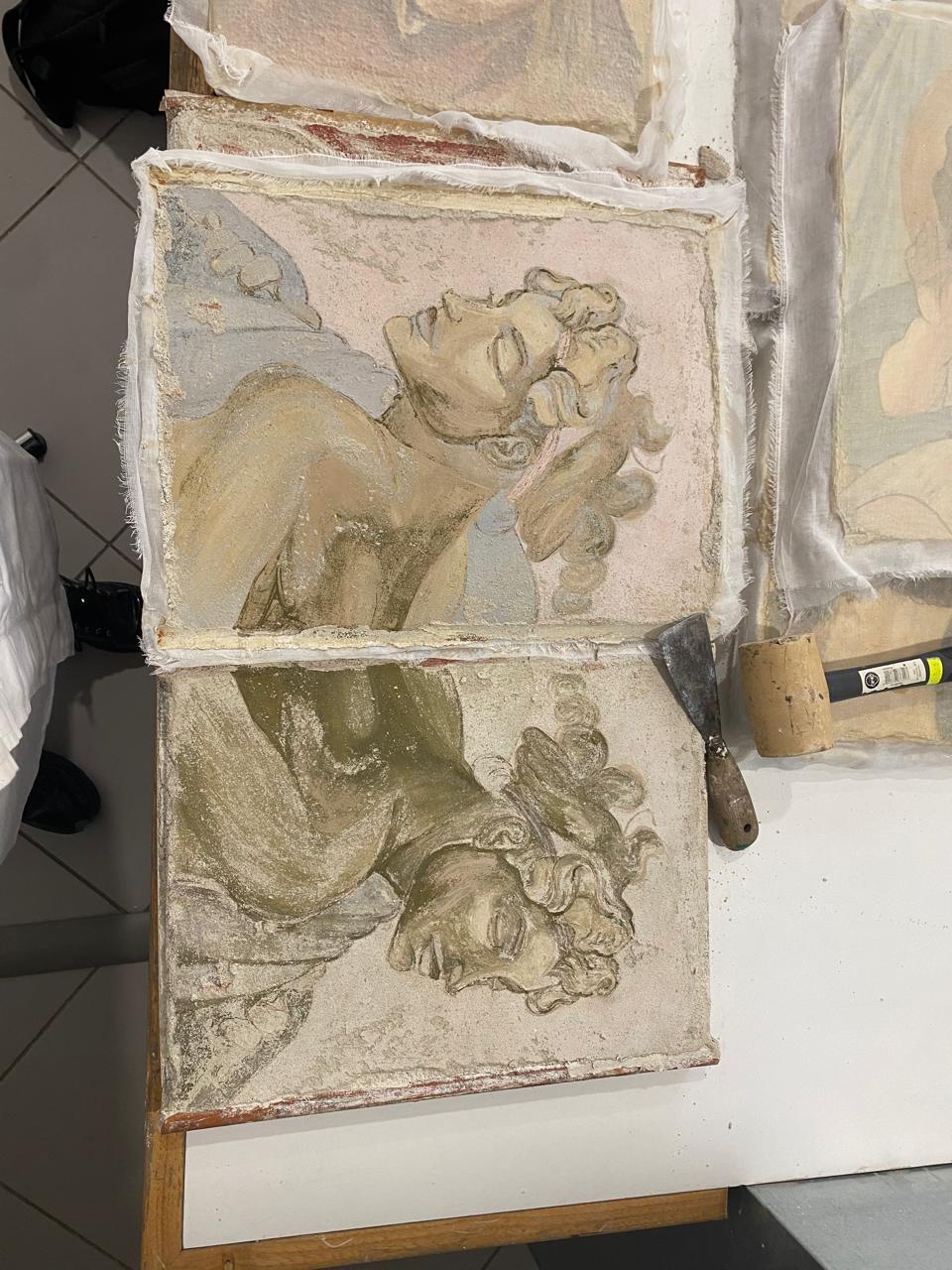
Once the adhesive has cured, the facing is carefully peeled away from the wall, bringing only the topmost paint layer with it and leaving the sinopia and arriccio behind.
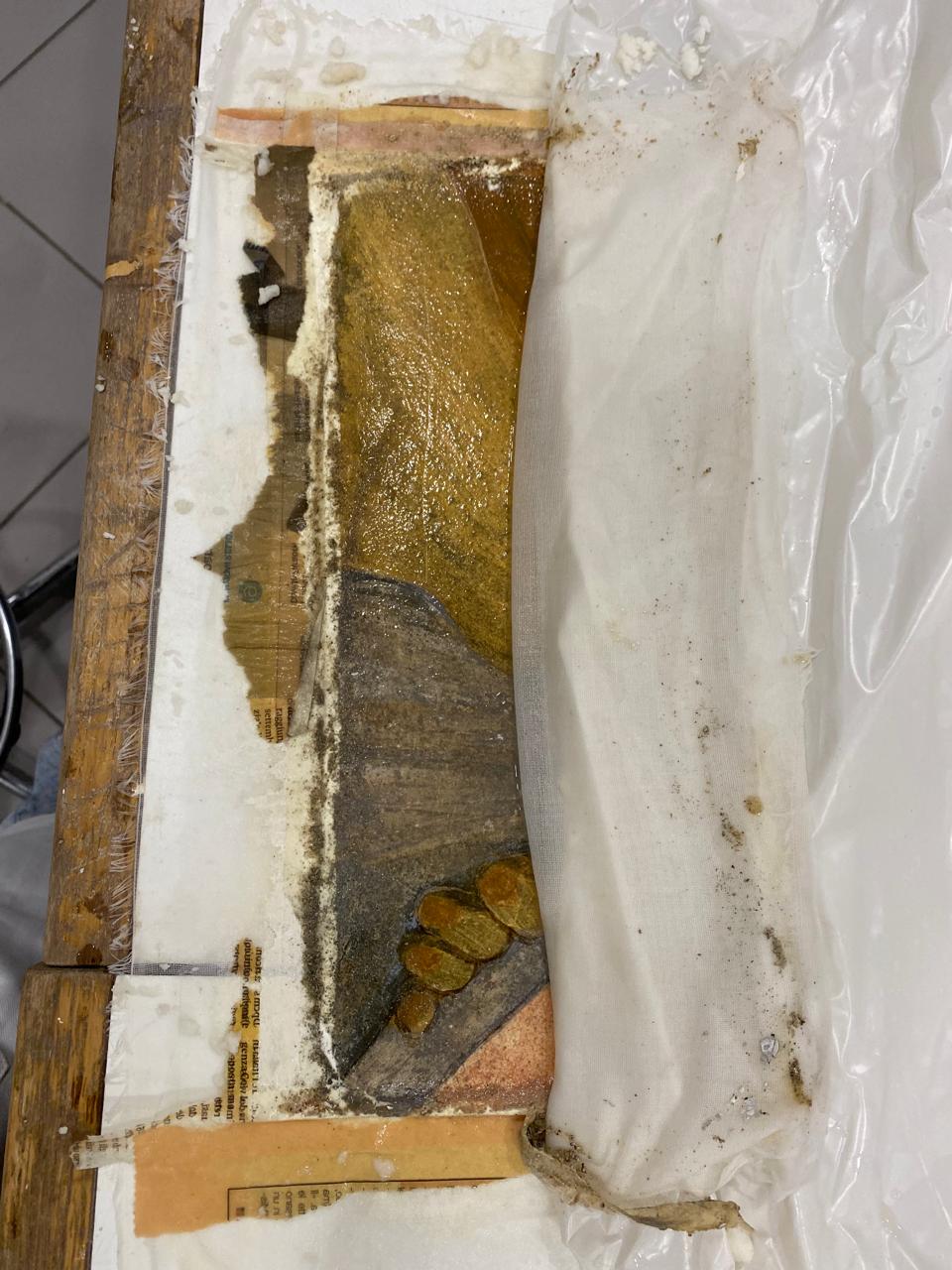
The detachment proceeds carefully across the surface. The fragility of the paint layer demands slow, controlled peeling to avoid loss or damage to the fresco.
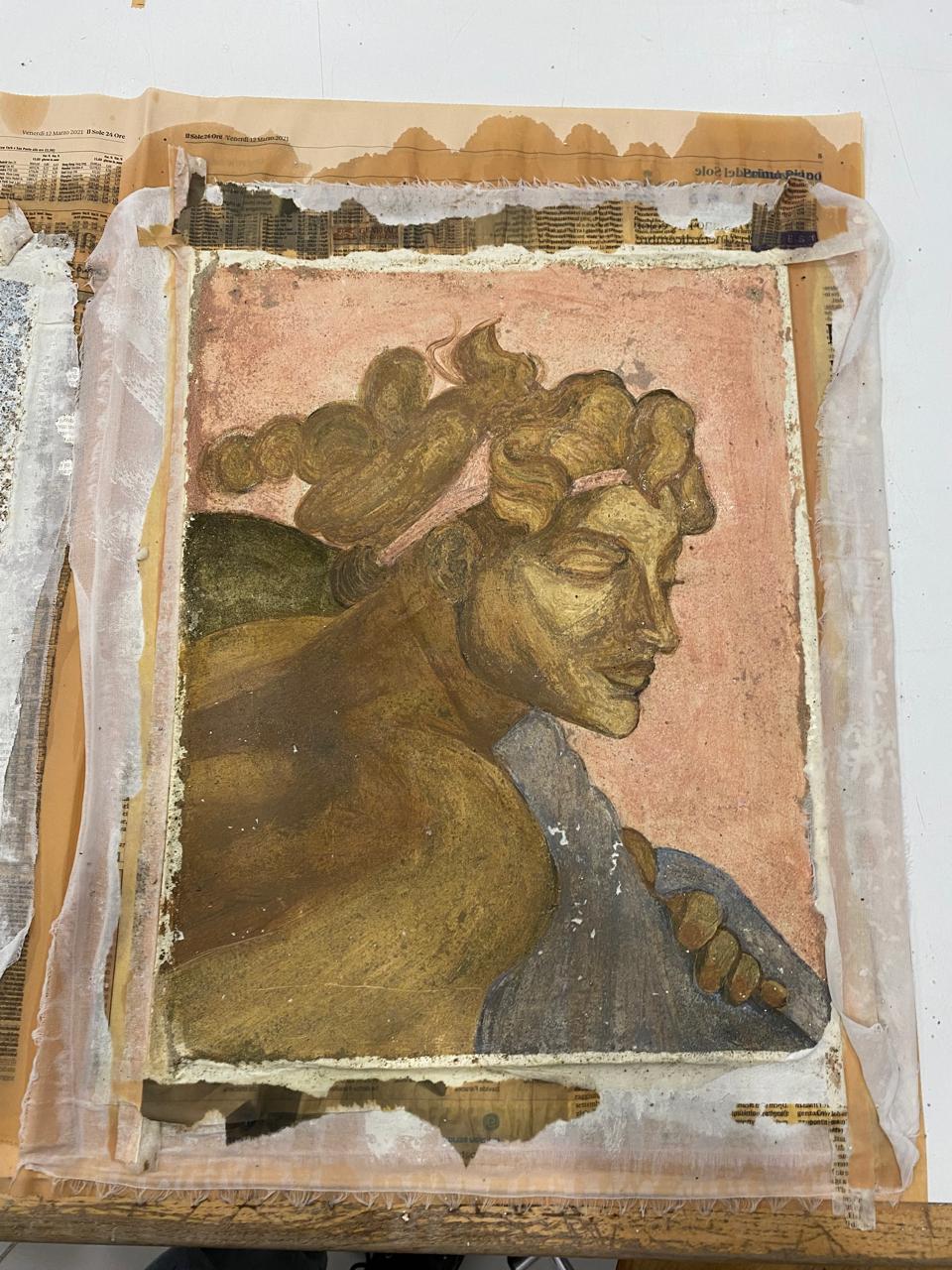
The fully detached paint layer, still protected by its fabric facing, is ready for mounting onto a new support. The wall surface is left with only the sinopia visible.
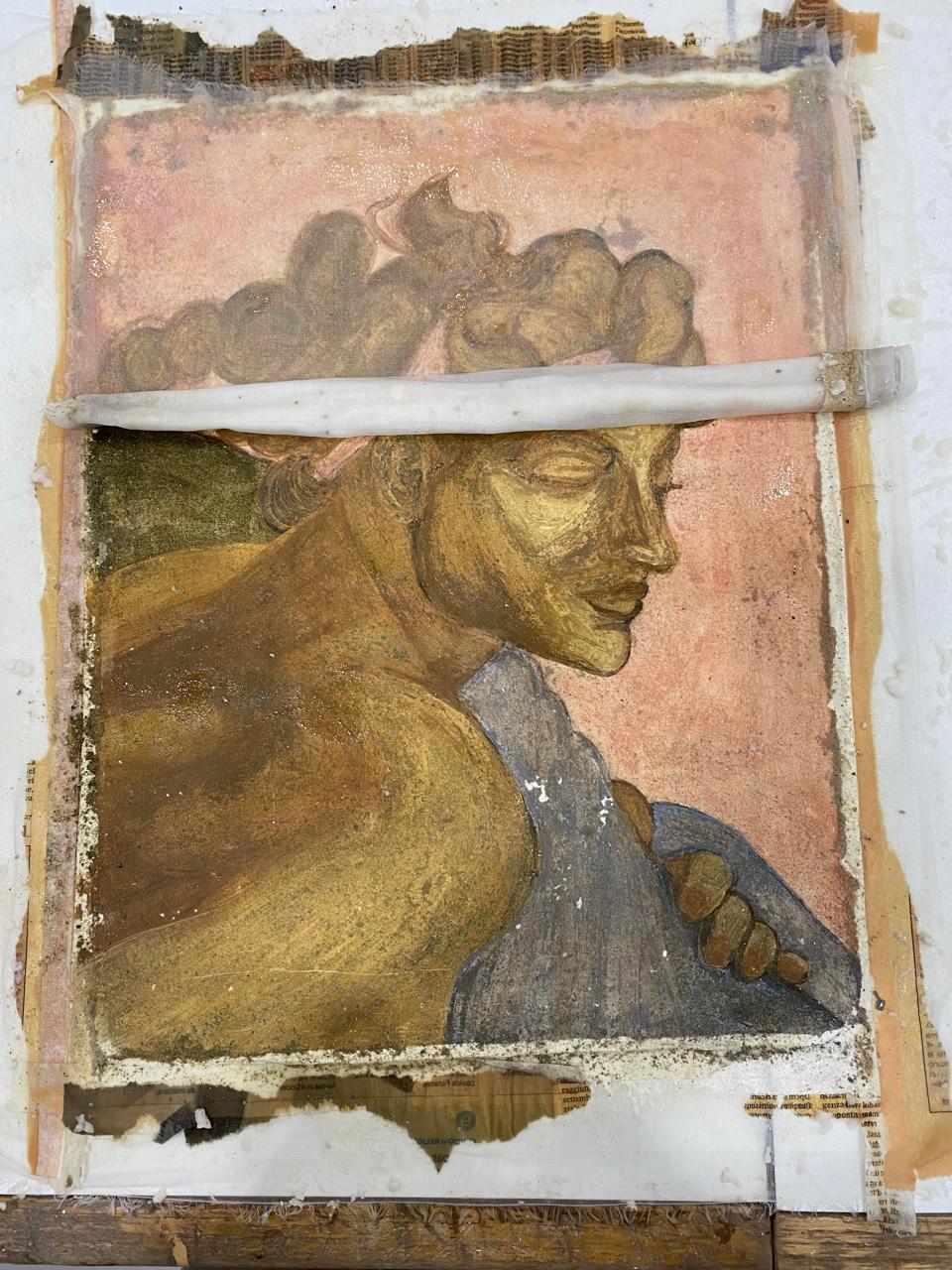
A full written account of the fresco painting and strappo detachment process, with illustrated step-by-step notes.