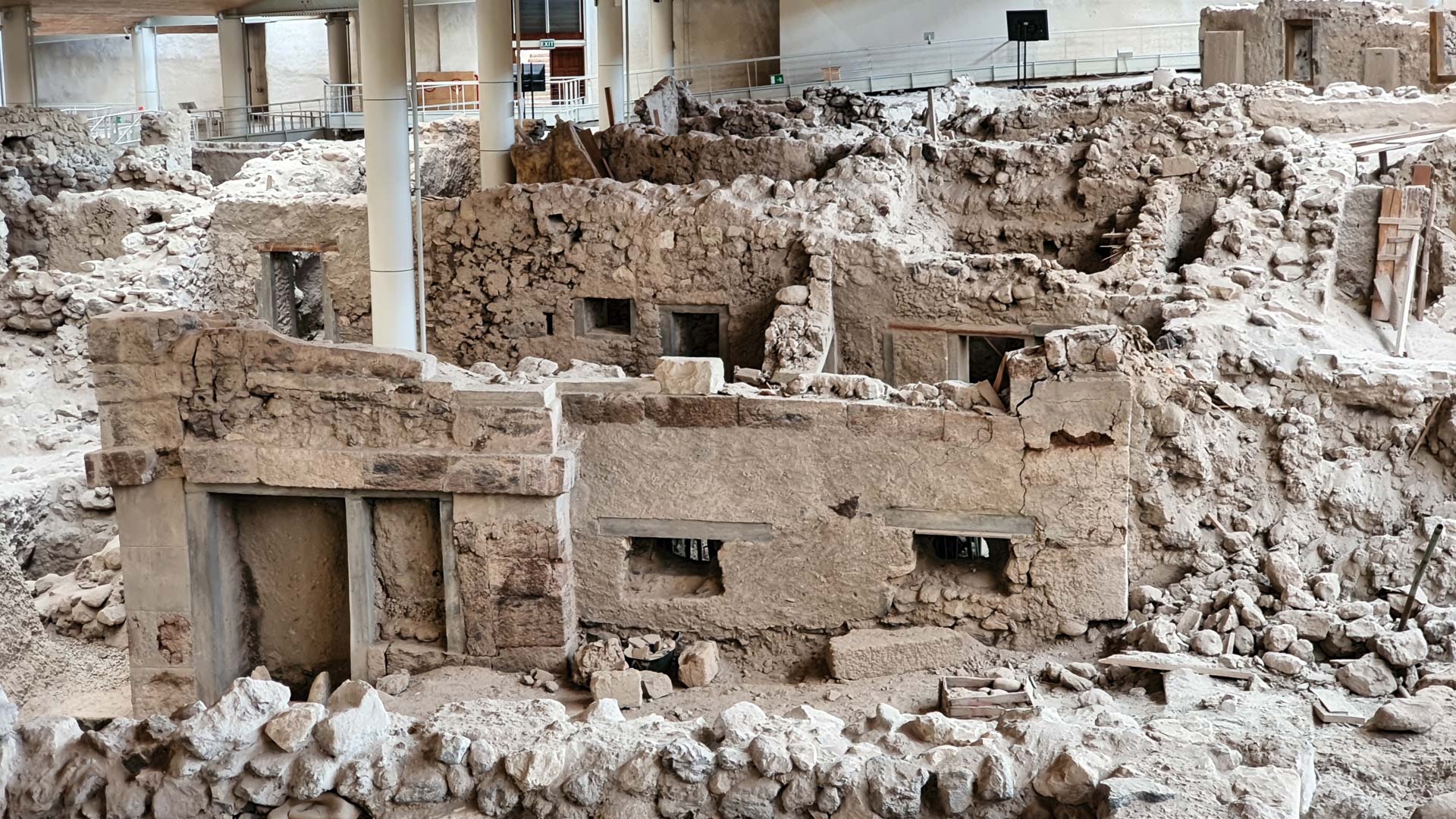
Wall Paintings of Akrotiri, Greece
The wall paintings of Akrotiri are among the best-preserved examples of Late Bronze Age (Minoan) mural painting in the world. Discovered at the Bronze Age settlement on the island of Santorini (ancient Thera), the site was sealed by a volcanic eruption around 1620–1500 BCE, preserving a substantial body of painted plaster under metres of ash.
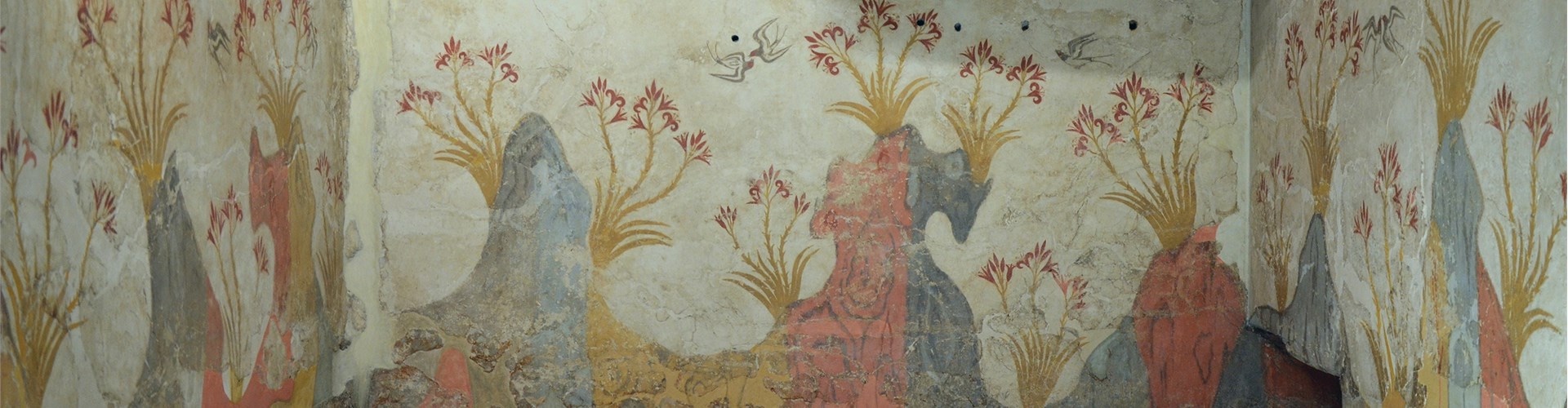
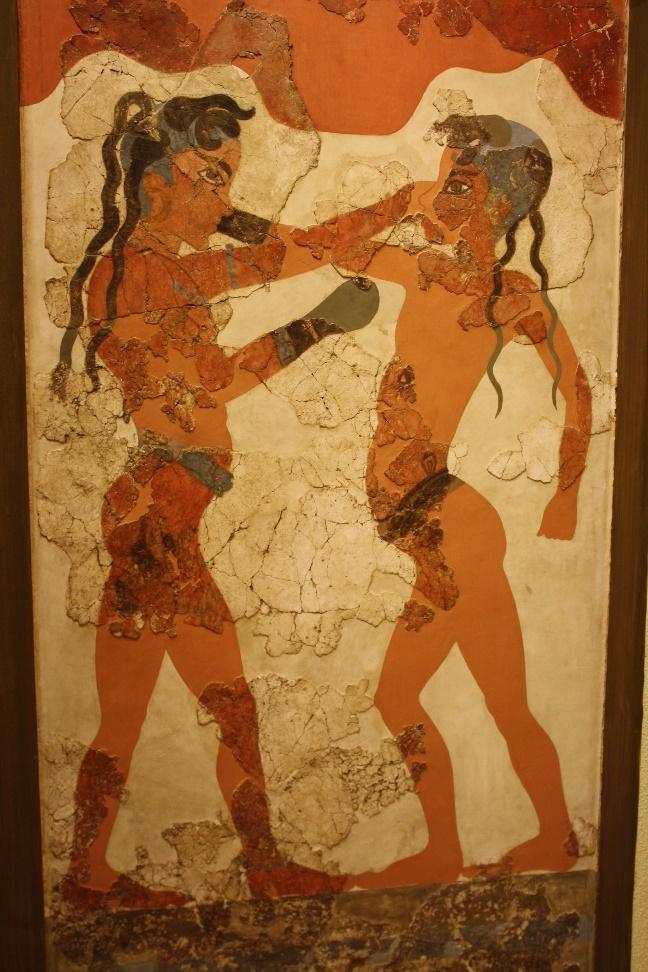
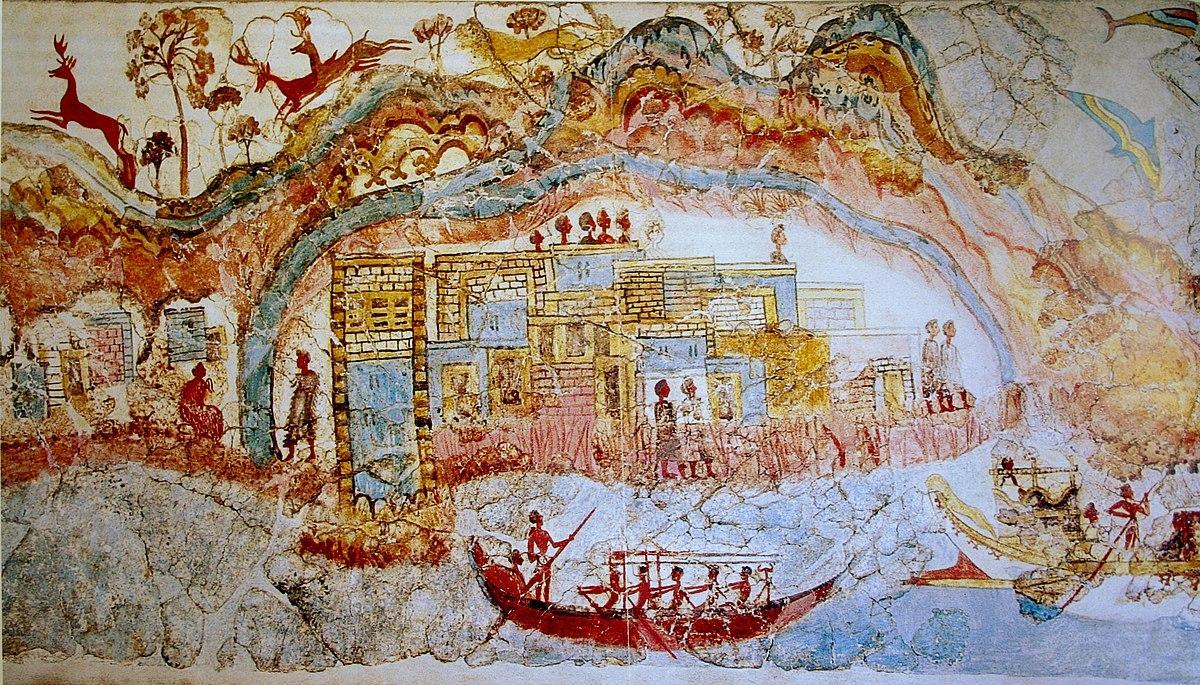
The paintings are remarkable for their scale, sophistication, and variety of subject matter: they include figurative scenes of processions, boxing youths, and fishermen; complex landscape compositions with swallows, lilies, and monkeys; and large-scale nautical and architectural paintings. They were executed in true fresco on multi-layered lime plaster and represent a distinct and highly developed pictorial tradition.
This research examines the technical characteristics of the Akrotiri paintings, their relationship to contemporary Aegean and Egyptian wall painting traditions, and the conservation challenges posed by their fragile condition and complex detachment history since excavation.
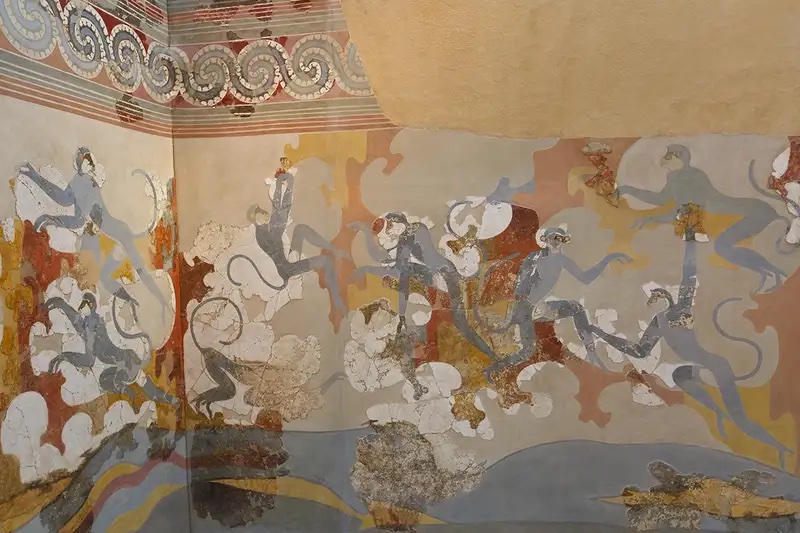
Full research paper on the wall paintings of Akrotiri: technique, iconographic programme, state of preservation, and conservation history.